
Kerry Rogers, MD, discusses the potential of ibrutinib (Imbruvica) in hairy cell leukemia, emerging treatment options such as moxetumomab pasudotox (Lumoxiti), and next steps and challenges in the field.

Your AI-Trained Oncology Knowledge Connection!
Kerry Rogers, MD, discusses the potential of ibrutinib (Imbruvica) in hairy cell leukemia, emerging treatment options such as moxetumomab pasudotox (Lumoxiti), and next steps and challenges in the field.

Robert J. Kreitman, MD, discusses the association between minimal residual disease-negativity and complete remission durations in patients with hairy cell leukemia treated with moxetumomab pasudotox.
Justin Taylor, MD, discusses the design of an ongoing phase II clinical trial evaluating the combination of frontline vemurafenib plus obinutuzumab in patients with hairy cell leukemia.
James Blachly, MD, discusses the role of circulating tumor DNA as a biomarker for patients with hairy cell leukemia.
Kerry Rogers, MD, discusses the results from an ongoing phase II trial investigating ibrutinib in patients with relapsed/refractory hairy cell leukemia. Because this represents a very rare patient population, accrual began in 2013, and these data reflect on a small portion of the 39 patients enrolled.
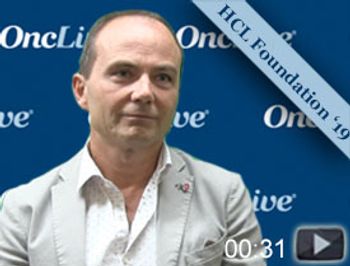
Enrico Tiacci, MD, discusses the current treatment options for patients with hairy cell leukemia. Currently, the standard of care for these patients are purine nucleoside analogs, including pentostatin and cladribine.
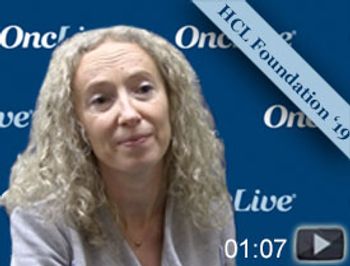
Agnieszka Janus, MD, PhD, discusses the efficacy and safety of moxetumomab pasudotox as a treatment option for patients with hairy cell leukemia. This agent was approved by the FDA in September 2018 for the treatment of adult patients with hairy cell leukemia who have received at least 2 prior lines of therapy, including a purine nucleoside analog.

Immunotherapy may finally be taking center stage in breast cancer, although much work remains to be done.
There is an unprecedented array of therapeutic options for patients with triple-negative breast cancer, with more approaches on the horizon.

C. Kent Osborne, MD, discusses the important take home message for physicians treating patients with HER2-positive breast cancer. Osborne says the role of HER2-positivity is complicated.
Hope S. Rugo, MD, discusses the latest advancements in the treatment landscape for patients with TNBC and highlights some data from clinical trials presented at the 2019 ESMO Congress.

Andrea V. Barrio, MD, FACS, discusses how the use of neoadjuvant chemotherapy can help de-escalate axillary node dissection in select patients with breast cancer. Dissection can be a morbid procedure with longterm risks of lymphoma, impacting the quality of life for many patients.

In breast cancer, neoadjuvant endocrine therapy shows promise in a variety of areas, including as an excellent testing platform, Ingrid A. Mayer, MD, MSCI, said in a presentation during the 2019 Lynn Sage Breast Cancer Symposium.
In contemporary breast cancer clinical practice, the correlation between achieving a pathologic complete response after neoadjuvant chemotherapy and significantly improved outcomes after chemotherapy has been well established. However, in a discussion at the 2019 Lynn Sage Breast Cancer Symposium, William J. Gradishar, MD, cautioned colleagues that there is more to the story when one looks at long-term data in these patients.
Monica Morrow, MD, discusses the factors that impact the decision to use nipple sparing mastectomy versus conventional mastectomy in patients with breast cancer. The decision to use a nipple sparing approach in patients is dependent on 2 considerations. These relate to the cancer as well as cosmetic appearance of the breast.
Naoto Tada Ueno, MD, PhD, FACP, discusses the diagnosis and treatment of patients with inflammatory breast cancer and highlights the biggest challenges in both diagnosing and treating this patient population.
Tari King, MD, FACS, chief of Breast Surgery, Dana-Farber Cancer Institute, Brigham Womens Cancer Center, discusses the role of a multidisciplinary team when considering neoadjuvant chemotherapy (NAC) for patients with breast cancer.
Jonathan B. Strauss, MD, MBA, discussed the role of hypofractionated radiotherapy in patients with breast cancer and offered advice on treatment selection.

As more becomes known about the biology of HER2-positive early breast cancer, C. Kent Osborne, MD, says that a multipronged strategy is the best approach regarding de-escalating chemotherapy in this patient population.
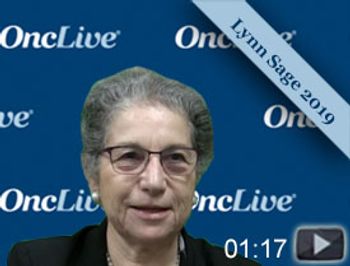
Patricia Ganz, MD, discusses the symptoms related to estrogen hormones that can cause more implications for women with breast cancer, including menopausal symptoms such as hot flashes, vaginal dryness, trouble sleeping, and fatigue.
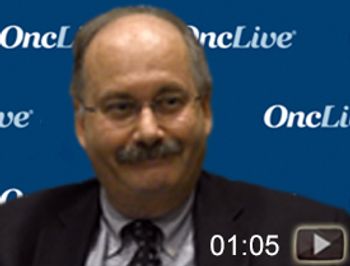
Edward A. Stadtmauer, MD, discusses the use of selinexor in patients with heavily pretreated, relapsed/refractory multiple myeloma.

Clinical guidelines have been necessary to help oncologists stay current in the face of rapidly evolving knowledge in HER2-positive breast cancer.
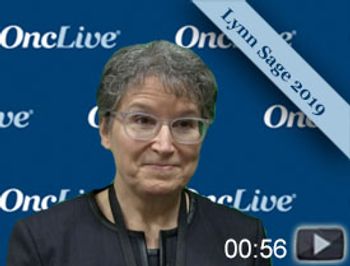
Kimberly Van Zee, MD, discusses the importance of preventing invasive recurrence in patients with breast cancer at the 21st Annual Lynn Sage Breast Cancer Symposium.

The combination of nivolumab and ipilimumab appears to have durable clinical activity in patients with recurrent or metastatic cervical cancer.

Men who received cabazitaxel (Jevtana) as a third-line systemic agent for metastatic castration-resistant prostate cancer had a significant reduction in radiographic disease progression, leading to a significant increase in overall survival.

Nivolumab extended overall survival compared with chemotherapy in patients with previously treated advanced esophageal squamous cell carcinoma.

Pembrolizumab (Keytruda) did not show an improvement in progression-free survival compared with chemotherapy in patients with malignant pleural mesothelioma.

A population of predominantly Chinese women with advanced hormone receptor–positive/HER2-negative breast cancer obtained significant benefits from treatment with the CDK4/6 inhibitor abemaciclib and endocrine therapy.
The first-line combination of atezolizumab (Tecentriq) and chemotherapy led to an improvement in median progression-free survival compared with placebo/chemotherapy in patients with locally advanced or metastatic urothelial carcinoma.

Treatment with ivosidenib reduced the risk of progression or death by 63% compared with placebo for pretreated patients with IDH1-mutant advanced cholangiocarcinoma.