

Blinatumomab plus chemotherapy significantly improved 3-year DFS rates vs chemotherapy alone in pediatric patients with standard-risk pediatric B-ALL.

Your AI-Trained Oncology Knowledge Connection!
Blinatumomab plus chemotherapy significantly improved 3-year DFS rates vs chemotherapy alone in pediatric patients with standard-risk pediatric B-ALL.
Treatment with bicistronic CD19/CD22 CAR T-cell therapy led to high 1-year EFS and OS rates among children with relapsed/refractory B-ALL.
Muhamed Baljevic, MD, FACP and Jorge Cortes, MD, discuss upcoming studies and emerging data being presented at the 2024 ASH Annual Meeting.
Perioperative vorasidenib or ivosidenib demonstrated sustained clinical benefit in patients with predominantly non-enhancing IDH1-mutant diffuse glioma.
Mirdametinib led to sustained, significant, and clinically meaningful improvements in HRQOL in adults and children with NF1-PN.
Priya U. Kumthekar, MD, discusses the use of a novel diagnostic platform to detect CSF tumor cells in patients with leptomeningeal disease.
David Schiff, MD, discusses PFS and OS data for radiation with or without temozolomide in patients with grade II glioma.
Larotrectinib produced rapid and durable responses and a high DCR in pediatric patients with TRK fusion–positive primary central nervous system tumors.
Timothy Gershon, MD, PhD, discusses an analysis of patients with NF1-PN who achieved deep responses with mirdametinib in the phase 2b ReNeu study.
Jordan R. Hansford, MD, discusses health-related quality-of-life outcomes with tovorafenib in pediatric patients with BRAF-altered low-grade glioma.
Updated INDIGO data reveal that vorasidenib continues to showcase improved efficacy over placebo in patients with IDH1/2-mutated diffuse glioma.
Tovorafenib generated durable drug holiday responses in pediatric patients with BRAF-altered relapsed/refractory low-grade glioma.

Early safety findings from the phase 2b RESTORE study (NCT03862430) of NanO2 plus radiation and temozolomide in newly diagnosed glioblastoma were shared.
J. Bradley Elder, MD, discusses blinded early-safety data from a phase 2b trial of IGV-001 in patients with newly diagnosed glioblastoma.
Rimas V. Lukas, MD, discusses the efficacy of eflornithine plus lomustine in recurrent IDH-mutant anaplastic astrocytoma per 2021 WHO diagnostic criteria.
IGV-001, an autologous cell immunotherapy, demonstrated an acceptable safety profile in patients with newly diagnosed glioblastoma.
Diane Reidy-Lagunes, MD, discusses key trials that have expanded the treatment paradigm for patients with neuroendocrine tumors.
Yelena Y. Janjigian, MD, discusses the significance of the FDA approval of zolbetuximab plus chemotherapy for HER2–, CLDN18.2+ gastric/GEJ adenocarcinoma.
Paolo Caimi, MD, discusses the rationale behind evaluating LMY-920, a novel BAFF CAR T-cell therapy, in relapsed/refractory non-Hodgkin lymphoma.
Jennifer Scalici, MD, discusses data for IMNN-001plus chemotherapy in advanced ovarian cancer.
Steven H. Lin, MD, PhD, discusses the safety of NKTR-255 in enhancing immune recovery post-chemoradiation in locally advanced NSCLC.
Anna Weiss, MD, discusses the significance of various imaging modalities in patients with breast cancer.
Roy S. Herbst, MD, PhD, discusses advances in EGFR inhibition throughout the past several decades in patients with lung cancer.
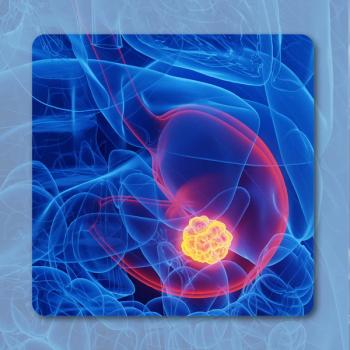
Yelena Y. Janjigian, MD, highlights key takeaways and data from 2024 in the gastric and GEJ cancer field.
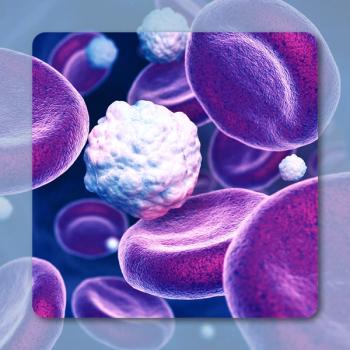
Transposon-engineered BAFF ligand–based CAR T cells induced responses with a tolerable safety profile among 3 patients with relapsed/refractory B-cell NHL.
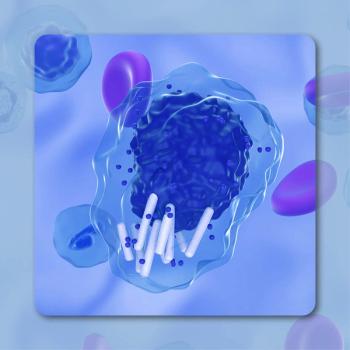
Nicole Lamanna, MD, highlights various clinical trials underway evaluating new treatment options for patients with chronic lymphocytic leukemia.
When evaluating real-world experience, differences in race/ethnicity and among elderly patients with DLBCL appeared different from those seen in clinical trials, highlighting the need for consideration in these patient populations.
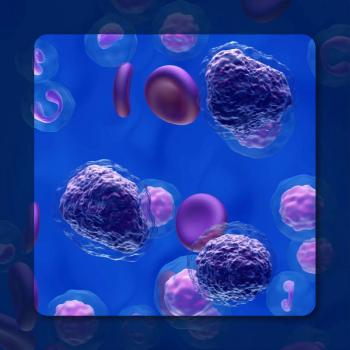
Advancements in FL treatment, including BTK inhibitors and CAR T-cell therapies, offer new hope for relapsed or refractory cases.
Victor Moreno, MD, PhD, discusses insights into the pharmacodynamic activity of CLN-619 for patients with advanced solid tumors.
RP1 plus nivolumab generated responses in advanced melanoma that progressed on or after prior anti–PD-1 therapy.