
Ajay Goel, PhD, AGAF, discusses upcoming clinical studies examining the prognostic biomarker CA19-9 plus an investigational exosome-based liquid biopsy for the detection of early-stage pancreatic cancer.

Your AI-Trained Oncology Knowledge Connection!
Ajay Goel, PhD, AGAF, discusses upcoming clinical studies examining the prognostic biomarker CA19-9 plus an investigational exosome-based liquid biopsy for the detection of early-stage pancreatic cancer.
Trastuzumab/pertuzumab/chemotherapy was associated with higher rates of toxicity and no mpRR improvement vs chemotherapy alone in HER2+ gastric cancer.

Tislelizumab plus irinotecan, paclitaxel, oxaliplatin, and 5-FU/leucovorin showcased encouraging efficacy and manageable safety in gastric/GEJ cancer.
Frontline nivolumab plus chemotherapy elicited clinically meaningful long-term survival benefits vs chemotherapy alone in advanced gastric/GEJ cancer.
Evorpacept plus TRP produced superior ORR, DOR, and PFS outcomes vs TRP alone in patients with HER2-positive gastric or gastroesophageal junction cancer.
OS benefits with tislelizumab plus chemotherapy were comparable between early and late responders in the phase 3 RATIONALE-306 study in patients with ESCC.
Nivolumab plus chemotherapy demonstrated long-term survival benefits in advanced gastric, GEJ, or esophageal cancer in China.

Tanios S. Bekaii-Saab, MD, and Yelena Y. Janjigian, MD, preview top presentations from this year’s Gastrointestinal Cancers Symposium.
Everolimus plus lanreotide demonstrated an improved PFS compared with everolimus monotherapy in gastroenteropancreatic neuroendocrine tumors.
First-line nivolumab plus chemotherapy numerically improved survival vs chemotherapy alone in Asian patients with unresectable/metastatic urothelial cancer.
Durvalumab plus vaccine therapy demonstrated evidence of preliminary antitumor activity without substantial additive toxicity in BCG-unresponsive NMIBC.
First-line paromlimab/tuvonralimab plus chemotherapy with or without bevacizumab was active in recurrent/metastatic cervical cancer.

BMS-986253 plus nivolumab/ipilimumab failed to improve responses or PFS in advanced melanoma after progression on or after a checkpoint inhibitor.
Tremelimumab plus paclitaxel induced responses in metastatic urothelial cancer after progression on platinum and an immune checkpoint inhibitor.

The addition of pembrolizumab to radiation did not improve survival in unresected, stage I or II non–small cell lung cancer.
Trastuzumab deruxtecan plus pembrolizumab showed early efficacy in patients with IO-naive, HER2-expressing or -mutant non–small cell lung cancer.
CheckMate 73L missed its primary end point of PFS in advanced unresectable stage III non–small cell lung cancer.
The neoadjuvant/adjuvant pembrolizumab and chemotherapy combination was approved by the FDA in October 2023 for use in this patient population.
Zongertinib demonstrated durable efficacy in patients with pretreated advanced HER2-mutant non–small cell lung cancer.

Second-line lenvatinib had clinically meaningful efficacy in patients with advanced HCC after progression on atezolizumab plus bevacizumab.
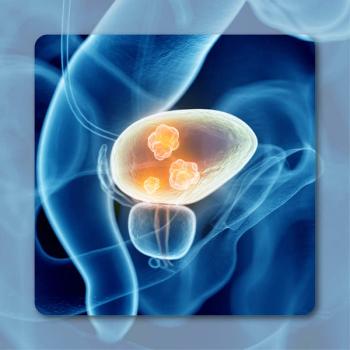
The phase 3 TROPiCS-04 study missed its primary end point of improved OS with sacituzumab govitecan vs chemotherapy in patients with urothelial cancer.

Rates of invasive cancer were noninferior when patients with low-risk ductal carcinoma in situ received active monitoring vs guideline concordant care.

Radiation therapy produced superior HRQOL outcomes and fewer toxicities vs endocrine therapy in older patients with stage I luminal-like breast cancer.

Ultra-sensitive tissue-free ctDNA testing showed that baseline ctDNA was associated with larger pathological tumor size in HR-positive breast cancer.

Elacestrant increased real-world TTNT for patients with ESR1-mutant HR-positive/HER2-negative breast cancer vs PFS from the phase 3 EMERALD trial.

The risk of developing high-grade immune-related AEs was heightened among patients with breast cancer who were older and who had chronic kidney disease.
Albert Grinshpun, MD, MSc, discusses the utility of ctDNA as a predictive biomarker of endocrine therapy sensitivity in patients with HR+ breast cancer.
Erica L. Mayer, MD, MPH, discusses findings with neoadjuvant niraparib plus dostarlimab in ER-positive, HER2-negative, BRCA/PALB2-mutated breast cancer.
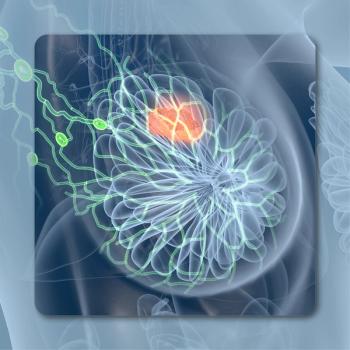
ctDNA was most frequently detected within 6 months post-treatment in patients with TNBC, aligning with the early recurrence pattern characteristic of the disease.

Treatment with atezolizumab and neoadjuvant chemotherapy followed by adjuvant atezolizumab did not improve EFS in triple-negative breast cancer.