

Treatment with acalabrutinib-based regimens led to long-term benefits in patients with higher-risk CLL, across all lines of therapy.

Your AI-Trained Oncology Knowledge Connection!
Treatment with acalabrutinib-based regimens led to long-term benefits in patients with higher-risk CLL, across all lines of therapy.

Darolutamide uptake in metastatic hormone-sensitive prostate cancer has become routine both in doublet and triplet regimens in community urology practices.

TAR-210 was safe and showed promising clinical activity in patients with FGFR-altered high- and intermediate-risk non–muscle-invasive bladder cancer.
Alexander Kutikov, MD, FACS, discusses treatment options for patients with urothelial cancer requiring cystectomy.
Roger Li, MD, discusses the rationale of the phase 3 MoonRISe-1 trial (NCT06319820).

Nadofaragene firadenovec led to durable antitumor activity in BCG-unresponsive NMIBC either with CIS or papillary disease, according to 5-year data from the phase 3 Study CS-003.

UGN-102 with/without TURBT displayed meaningful and similar DFS and DOR rates in newly diagnosed and recurrent low-grade intermediate-risk NMIBC.
Katherine Wang, MD, discusses the role of active surveillance for patients with renal masses and the ongoing MUSIC-KIDNEY project in Michigan.
Joshua J. Meeks, MD, PhD, discusses effectively implementing recent therapeutic advances across the disease continuum of bladder cancer.
18F-DCFPyL PSMA-PET imaging plus multi-parametric MRI improved the detection of clinically significant prostate cancer in low- and high-risk men on active surveillance.

Enzalutamide alone and with leuprolide led to greater rates of undetectable PSA levels vs leuprolide alone in castration-sensitive prostate cancer.
Neal Shore, MD, FACS, discusses the importance of a multidisciplinary team in light of recent developments in urologic oncology.
Apalutamide and ADT elicited a 100% biochemical recurrence-free survival rate at 24 months in high-risk localized prostate cancer following radical prostatectomy.
Outcome improvements with lutetium Lu 177 vipivotide tetraxetan vs ARPI change favored prior treatment with abiraterone vs enzalutamide in mCRPC.

18F-PSMA-1007 PET/CT generated superior locoregional staging results vs multiparametric MRI in patients with prostate cancer.

Concurrent radical cystectomy and extended lymph node dissection did not show benefit vs standard lymph node dissection in muscle invasive urothelial cancer.

TAR-200 displayed a high complete response rate in Bacillus Calmette–Guérin-unresponsive high-risk non–muscle-invasive bladder cancer.

High-intensity focused ultrasound produced noninferior salvage treatment-free survival vs radical prostatectomy in localized prostate cancer.
Cretostimogene grenadenorepvec elicited durable responses in high-risk BCG-unresponsive non–muscle-invasive bladder cancer with carcinoma in situ.
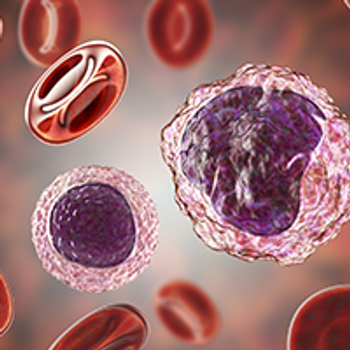
The CAR T-cell therapy NXC-201 has received orphan drug designation from the European Commission for patients with multiple myeloma.

A phase 2 trial of stenoparib in advanced recurrent ovarian cancer has been closed early to enable a follow-on trial with FDA regulatory intent.

Florida Cancer Specialists & Research Institute, LLC is calling for reform in value-based oncology care modeling.

Rebecca Klisovic, MD, discusses 4 case studies of patients who presented with varying types of myelofibrosis and the appropriate treatment avenues for each patient.

Leland Metheny, MD, discusses ongoing clinical trials and their implications for the field of hematologic oncology.
Erin Frances Cobain, MD, discusses unanswered questions regarding the use of ribociclib and immunotherapy in early-stage breast cancer.
Kian-Huat Lim, MD, PhD, discusses the role of multidisciplinary collaboration and clinical trials in the treatment of pancreatic cancer.

Changchun Deng, MD, PhD, discusses factors to consider when sequencing covalent BTK inhibitors and venetoclax in patients with CLL/SLL.
Jonathan E. Rosenberg, MD, discusses how recent FDA approvals have revolutionized the treatment paradigm for locally advanced or metastatic bladder cancer.
Acalabrutinib plus bendamustine and rituximab (BR) led to a statistically significant improvement in PFS vs BR for treatment-naive mantle cell lymphoma.
Fox Chase Cancer Center researchers showed that estrogen is metabolized in lungs, contributing to the development of lung cancer in never smokers.