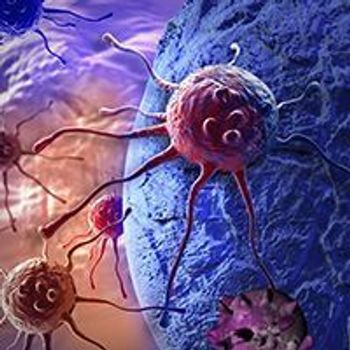
Bexmarilimab in combination with standard-of-care azacitidine or azacitidine plus venetoclax demonstrated early signs of efficacy in patients with relapsed or refractory acute myeloid leukemia and myelodysplastic syndrome.

Your AI-Trained Oncology Knowledge Connection!


Bexmarilimab in combination with standard-of-care azacitidine or azacitidine plus venetoclax demonstrated early signs of efficacy in patients with relapsed or refractory acute myeloid leukemia and myelodysplastic syndrome.

Neeraj Agarwal, MD, speaks on the significance of the approval and how the combination of talazoparib and enzalutamide will fit into the treatment landscape of HRR gene–mutated mCRPC.

Ahmed Elkhanany, MD discusses unmet needs in patients with estrogen receptor–positive breast cancer who progress on frontline therapy, treatment considerations for these patients, and how FES PET imaging may benefit this population.

Tycel Phillips, MD, discusses the rationale and design of a phase 1b trial investigating acalabrutinib plus bendamustine and rituximab in patients with mantle cell lymphoma, highlights key efficacy and safety findings in the treatment-naïve and relapsed/refractory patient cohorts, and postulated next steps on the horizon for investigating BTK inhibitors in combination with chemotherapy in this patient population.

Theseus Pharmaceuticals has announced that the development of THE-630 as a potential therapeutic option for patients with gastrointestinal stromal tumor has been terminated, and enrollment to the ongoing phase 1/2 trial evaluating the agent’s safety and efficacy in this population has been discontinued.

Finding a comprehensive cancer care provider that is able to provide patients with swift and easy access to the highest-quality diagnosis and treatment planning is essential to reducing stress and ensuring patients achieve the best possible outcomes.

The addition of pembrolizumab to external beam radiotherapy and concurrent chemotherapy, followed by brachytherapy, improved progression-free survival vs concurrent chemoradiotherapy alone in newly diagnosed patients with high-risk locally advanced cervical cancer.

The FDA has granted a fast track designation to selinexor for use in the treatment of patients with myelofibrosis, including primary myelofibrosis, post–essential thrombocytopenia myelofibrosis, and post–polycythemia vera myelofibrosis.

Treatment with the combination of the tissue-specific therapeutic IMX-110 and the anti–PD-1 antibody tislelizumab led to tumor shrinkage in heavily pretreated patients with metastatic colorectal cancer.

The third-generation EGFR TKI lazertinib displayed a significant efficacy improvement compared with gefitinib in patients with EGFR-mutated advanced non–small cell lung cancer when given in the first-line.

Adrienne G. Waks, MD, spotlights the need to understand mechanisms of resistance to second-line HER2-positive breast cancer therapies, chemotherapy-free regimens with later-line treatment potential, and the future of HER2-positive disease management.

Maryam Lustberg, MD, MPH, discusses insights regarding other key breast cancer data presented at the 2023 ASCO Annual Meeting, including findings from the phase 3 BWEL trial, updated data from the phase 2 ELAINE-2 trial, and the final overall survival analysis of the phase 3 TROPiCS-02 trial.

Shannon Westin, MD, MPH, FACOG, expands on key clinical trial updates in gynecologic oncology shared at the 2023 ASCO Annual Meeting and highlights what she is looking forward to seeing in the future of care for patients with gynecologic malignancies.

The novel bifunctional fusion protein SHR-1701 combined with standard first-line treatment with the bevacizumab biosimilar BP102 and platinum-doublet chemotherapy produced high, durable responses and was deemed tolerable in patients with cervical cancer.

The combination of the NOX1/4 inhibitor setanaxib and pembrolizumab produced progression-free survival benefits compared with placebo plus pembrolizumab in patients with recurrent or metastatic head and neck squamous cell carcinoma.

The allogeneic CAR T-cell therapy CB-010 demonstrated early signs of durable antitumor activity and favorable safety in patients with relapsed/refractory B-cell non-Hodgkin lymphoma.

Cedars-Sinai Cancer investigators elucidate how this process allows bladder tumors to evade the immune system but also makes them vulnerable to a common treatment.

The FDA has granted an orphan drug designation to gallium maltolate for use as a potential therapeutic option in pediatric patients with glioblastoma multiforme.

Jason Luke, MD, FACP, discusses key takeaways from the KEYNOTE-716 and KEYNOTE-942 trials and other key updates from across the melanoma landscape presented at the 2023 ASCO Annual Meeting.

Patients with synchronous metastatic renal cell carcinoma who received first-line immunotherapy had worse survival outcomes compared with those with metachronous metastatic renal cell carcinoma.

Adrienne G. Waks, MD, spotlights the role of the HER2CLIMB regimen in patients with HER2-positive breast cancer with brain metastases, discusses unmet needs in the fourth- and later-line settings in HER2-positive disease, and explains the basis for the ongoing HER2CLIMB-02 and HER2CLIMB-04 trials within the broader ADC landscape.

The addition of the CXCL12 inhibitor NOX-A12 to standard-of-care radiotherapy and bevacizumab elicited responses when used as first-line treatment in patients with glioblastoma, according to updated data from the expansion arm of the phase 1/2 GLORIA trial.

Amivantamab-vmjw plus carboplatin and pemetrexed led to a clinically meaningful and statistically significant improvement in progression-free survival vs carboplatin and pemetrexed alone in patients with newly diagnosed advanced or metastatic EGFR exon 20 insertion–mutated non–small cell lung cancer.

One of the world’s foremost biochemists is joining Sylvester Comprehensive Cancer Center at the University of Miami Miller School of Medicine, bringing decades of groundbreaking research in genetics, epigenetics and cellular processes.

The European Medicines Agency has accepted a marketing authorization application seeking the approval of zolbetuximab for first-line treatment of patients with Claudin18.2-positive, HER2-negative, unresectable, locally advanced or metastatic gastric or gastroesophageal junction adenocarcinoma.

The FDA has accepted for review a new drug application seeking the approval of rivoceranib in combination with camrelizumab as a first-line treatment option for patients with unresectable hepatocellular carcinoma.

The DecisionDx-Melanoma 31-gene expression profile test displayed the capability to stratify patients with cutaneous melanoma by risk of death from the disease and receival of the 31-GEP test may result in a survival benefit compared with untested patients.

Joseph Christopher Murray, MD, discusses the role of prognostic markers in non–small cell lung cancer and how data from the EMPOWER trials will guide future directions in the space.

The investigation of treatment regimens featuring antibody-drug conjugates or radiotherapeutics are part of the ongoing wave of research in renal cell carcinoma.

The combination of lenvatinib and pembrolizumab continued to show clinical activity in patients with metastatic renal cell carcinoma, including in subsets of patients who had received or were naïve to checkpoint inhibitors.