

The EMA's Committee for Medicinal Products for Human Use has adopted a positive opinion regarding sacituzumab govitecan-hziy monotherapy in select patients with unresectable or metastatic hormone receptor–positive, HER2-negative breast cancer.

Your AI-Trained Oncology Knowledge Connection!
The EMA's Committee for Medicinal Products for Human Use has adopted a positive opinion regarding sacituzumab govitecan-hziy monotherapy in select patients with unresectable or metastatic hormone receptor–positive, HER2-negative breast cancer.
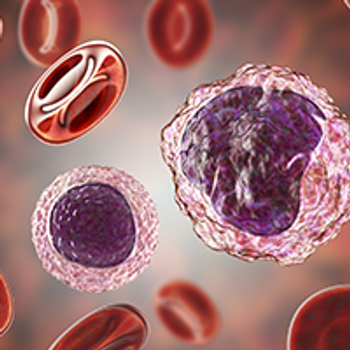
The combination of venetoclax, atezolizumab, and obinutuzumab elicited responses and prolonged time progression, in patients with chronic lymphocytic leukemia with Richter transformation, according to data from the phase 2 MOLTO trial.
The arrival of the Enhancing Oncology Model has renewed the uncertainties surrounding value-based care approaches for practices opting into the next wave of Center for Medicare & Medicaid Services performance structure

The Pennsylvania Medical Society released its list of the 2023 Top Physicians Under 40 award recipients; 4 Fox Chase Cancer Center physicians were honored.

The FDA has granted an orphan drug designation to the orally bioavailable, reversible small molecule EGFR inhibitor ERAS-801 for the treatment of patients with malignant glioma, including glioblastoma.
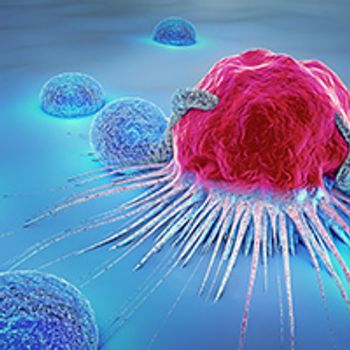
Epcoritamab has been added to the National Comprehensive Cancer Network Clinical Practice Guidelines in Oncology for B-cell Lymphomas in the third- or later-line setting for the treatment of patients with diffuse large B-cell lymphoma, including patients with disease progression after transplant or CAR T-cell therapy, and as a category 2A preferred regimen for patients with histologic transformation of indolent lymphoma to DLBCL with no intention to proceed to transplant, including patients with disease progression after transplant or CAR T-cell therapy.
Despite alarming figures and trends, public awareness of alcohol as a carcinogen remains low.

John M. Burke, MD, expands on the use of novel BTK inhibitor regimens in mantle cell lymphoma, treatment sequencing challenges and other unmet needs in diffuse-large B-cell lymphoma, the evolution of management strategies for myeloproliferative neoplasms, and the potential influence of new and emerging therapeutics in chronic lymphocytic leukemia.

Fixed-duration therapy with venetoclax plus obinutuzumab led to 60% reduction in the risk of progression or death compared with chlorambucil plus obinutuzumab, with benefit seen regardless of TP53 or IGHV mutation status, in previously untreated patients with chronic lymphocytic leukemia.
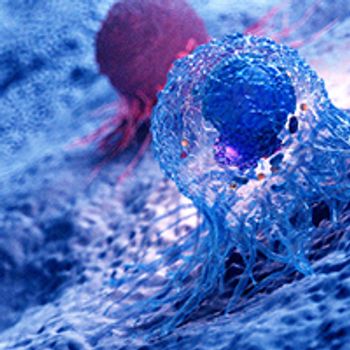
The CAR T-cell therapy AUTO4 was not associated with dose-limiting toxicities and led to early indications of efficacy in patients with relapsed/refractory TRBC1-positive peripheral T-cell lymphoma.

The BrECADD combination had noninferior efficacy and superior tolerability compared with escalated BEACOPP in patients with advanced classical Hodgkin lymphoma, according to data from the phase 3 HD21 trial.

Prithviraj Bose, MD, discusses the development of non-myelosuppressive JAK inhibitors for patients with myelofibrosis, where the future of combination therapy is headed in this population, and the importance of enrolling patients in clinical trials that are tailored to their disease subset and treatment needs.
The FDA has issued a complete response letter to the new drug application seeking the approval of ADX-2191 for the treatment of patients with primary vitreoretinal lymphoma.
The University of Florida Health Cancer Center has received prestigious designation from the National Cancer Institute, or NCI, and joins the ranks of the country’s most distinguished cancer centers, becoming the 72nd in the United States and the only one in North Central Florida.
In 2011, the development of ipilimumab, a novel antibody targeting the CTLA-4 immune checkpoint, helped launch the modern era of anticancer immunotherapy.
Zanubrutinib plus obinutuzumab and venetoclax demonstrated lasting responses characterized by sustained progression-free survival and undetectable minimal residual disease in peripheral blood and bone marrow in previously untreated patients with chronic lymphocytic leukemia or small lymphocytic lymphoma.
Extended follow-up from the phase 3 SEQUOIA trial demonstrated that zanubrutinib maintained a progression-free survival benefit compared with bendamustine plus rituximab in previously untreated patients with chronic lymphocytic leukemia or small lymphocytic lymphoma.
Zilovertamab vedotin was tolerable and generated early efficacy signals in patients with relapsed/refractory non-Hodgkin lymphoma.

The FDA has granted regular approval to blinatumomab (Blincyto) for the treatment of adult and pediatric patients with CD19-positive B-cell precursor acute lymphoblastic leukemia in first or second complete remission with minimal residual disease of at least 0.1%
The combination of favezelimab and pembrolizumab continued to demonstrate a manageable safety profile and antitumor activity in patients with relapsed/refractory classical Hodgkin lymphoma, irrespective of whether they received prior anti–PD-1 therapy.
A new drug application seeking the approval of imetelstat for use as a therapeutic option for transfusion-dependent anemia in adult patients with low- to intermediate-1 risk myelodysplastic syndrome who have not responded to, lost response to, or were not candidates for erythropoiesis-stimulating agents has been submitted to the FDA.
Physicians at Cedars-Sinai Cancer are using a unique chemotherapy delivery system that offers hope to colorectal cancer patients whose disease has spread and who now have inoperable liver tumors.

A panel of head and neck cancer experts discussed the nuances of managing relapsed or refractory DTC with lenvatinib or sorafenib, as well as sequencing considerations with targeted therapies in the second-line setting and beyond for patients with relapsed or refractory disease.

Patients with relapsed/refractory chronic lymphocytic leukemia treated with ibrutinib in the phase 3 RESONATE trial achieved a significantly longer median progression-free survival compared with those in the phase 3 ALPINE trial, as well as a higher yet nonsignificant 2-year PFS estimate vs those in the phase 3 ELEVATE-RR trial.
The FDA has approved talazoparib (Talzenna) plus enzalutamide (Xtandi) for use in patients with homologous recombination repair gene–mutated metastatic castration-resistant prostate cancer.
The novel, autologous, anti-CD19 CAR T-cell therapy anbalcabtagene autoleucel produced durable responses and was well tolerated in patients with relapsed/refractory large B-cell lymphoma.
Joshua Eric Reuss, MD, discusses the enrollment criteria for the HARMONIC trial, the demonstrated safety and efficacy of LP-300, and potential benefits of the agent for never smokers with advanced non–small cell lung cancer.
Neoadjuvant treatment with pembrolizumab plus chemotherapy, followed by adjuvant pembrolizumab plus chemotherapy, then pembrolizumab monotherapy, led to a statistically significant improvement in pathological complete response rates vs neoadjuvant chemotherapy alone in patients with locally advanced, resectable gastric and gastroesophageal junction adenocarcinoma.

In a recently published manuscript, Howard Colman, MD, PhD, identified a potential breakthrough in glioblastoma treatment.
The FDA has placed a hold on the clinical program for the investigational new drug CART-ddBCMA for the treatment of patients with relapsed/refractory multiple myeloma.