

Patients with hepatocellular carcinoma who developed treatment-related adverse effects associated with atezolizumab plus bevacizumab had improved overall survival and progression-free survival outcomes.

Your AI-Trained Oncology Knowledge Connection!
Patients with hepatocellular carcinoma who developed treatment-related adverse effects associated with atezolizumab plus bevacizumab had improved overall survival and progression-free survival outcomes.
The European Medicines Agency Committee for Orphan Medical Products has granted an orphan drug designation to CAN-2409 for the treatment of patients with glioma.

Dr. Cacchione Will Lead Jefferson in Shaping the Future of Healthcare, Higher Education and Discovery
Investigators are making progress in delineating the optimal use of radiation therapy for the treatment of patients with small cell lung cancer, which remains a cornerstone of therapy for the malignancy, particularly in limited-stage disease.

Dose optimization of regorafenib led to improved survival outcomes compared with best supportive care of fruquintinib, standard-dose regorafenib, and trifluridine/tipiracil in patients with relapsed/refractory metastatic colorectal cancer.
The FDA has granted a fast track designation to envafolimab for the treatment of patients with locally advanced, unresectable, or metastatic undifferentiated pleomorphic sarcoma and myxofibrosarcoma who have progressed on 1 or 2 prior lines of chemotherapy.
Mark Yarchoan, MD, lays out the evolution of drug development in biliary tract cancer, discusses the findings from the TOPAZ-1 trial, and shares the positive future direction of immunotherapy in this disease.
Pembrolizumab plus axitinib produced promising responses in patients with papillary or chromophobe metastatic renal cell carcinoma.

Rutgers Cancer Institute of New Jersey and RWJBarnabas Health have appointed Matthew Matasar, MD, MS, as Chief of Blood Disorders at New Jersey’s leading cancer center and the only one in the state designated as a Comprehensive Cancer Center by the National Cancer Institute.

Maintenance treatment with niraparib produced a sustained and durable progression-free survival benefit in patients with primary advanced ovarian cancer who responded to first-line platinum-based chemotherapy, spanning biomarker subgroups.

Adjuvant nivolumab monotherapy elicited a statistically significant and clinically meaningful improvement in recurrence-free survival compared with placebo for patients with completely resected stage IIB/C melanoma.
During the past 15 years, breakthrough discoveries have revolutionized the treatment landscape for most patients with lung cancer, progress that has helped fuel an overall drop in cancer mortality.
Lasofoxifene plus abemaciclib produced promising efficacy when administered to pre- and postmenopausal patients with locally advanced or metastatic, estrogen receptor–positive, HER2-negative breast cancer who harbored an ESR1 mutation.

Abhinav Deol, MD, discusses how Karmanos Cancer Institute prepares trainees for their first job and helps them handle negative situations and deal with grief.
The ROR1-targeting bispecific T-cell engager NVG-111 elicited promising responses with a manageable safety profile in patients with relapsed/refractory chronic lymphocytic leukemia or mantle cell lymphoma.

Jill Gilbert, MD, offers advice for the start of a new fellowship in oncology and hematology.
Higher baseline and longitudinal evaluations of health-related quality of life prior to and during treatment with nivolumab and cabozantinib demonstrated an association with improved progression-free survival and overall survival in patients with advanced, treatment-naïve renal cell carcinoma.

Florida Cancer Specialists & Research Institute welcomes Board-certified hematologist/oncologist Shivtaj Mann, DO, to the statewide practice.
Maurie Markman, MD, elaborates on the need to take a closer look at the benchmarks used in clinical trial designs in oncology.
Treatment with brexucabtagene autoleucel drove durable responses in patients with relapsed/refractory mantle cell lymphoma, particularly those with minimal residual disease negativity at 6 months.

A supplemental new drug application and a Type II variation has been submitted to the FDA and the European Medicines Agency, respectively, seeking the approval of rucaparib as frontline maintenance treatment in women with advanced ovarian cancer irrespective of biomarker status who have responded to first-line platinum-based chemotherapy.
The decline of prostate-specific antigen following treatment with lutetium Lu 177 vipivotide tetraxetan plus standard of care was linked with prolonged radiographic progression-free survival and overall survival in patients with progressive prostate-specific membrane antigen–positive metastatic castration-resistant prostate cancer.
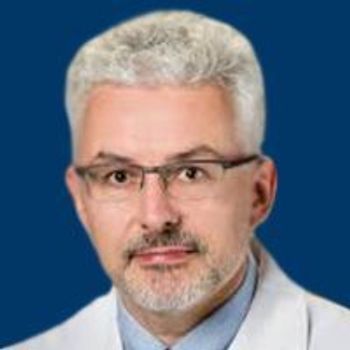
Srdan Verstovsek, MD, PhD, discusses the clinical implications of the FDA approval of pemigatinib, the results of the FIGHT-203 trial, and the need to conduct chromosomal analysis for patients with myeloid/lymphoid neoplasms.

The addition of bevacizumab to trifluridine/tipiracil resulted in a statistically significant improvement in overall survival over trifluridine/tipiracil alone in patients with refractory metastatic colorectal cancer after 2 chemotherapy regimens.

Intensive first-line treatment with high-dose chemotherapy and autologous stem cell transplant was not associated with higher rates of late effects compared with outcomes from less intensive therapies in patients with mantle cell lymphoma.

In a recent study, researchers at Fox Chase Cancer Center demonstrated how cancer cells can survive in the body even when faced with a lack of sufficient nutrition, a finding that could be used as a potential indicator of disease status in the organs of pancreatic cancer patients.
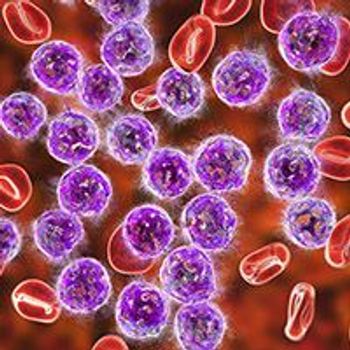
Obinutuzumab, acalabrutinib, and venetoclax following optimal debulking with bendamustine failed to meet the prespecified rate of undetectable minimal residual disease in the peripheral blood at the end of induction treatment in patients with relapsed/refractory chronic lymphocytic leukemia.

The FDA has granted an orphan drug designation to DUNP19 for the treatment of osteosarcoma.

The combination of lenvatinib and pembrolizumab was found to induce high response rates, including long-lasting remissions, and have acceptable safety in patients with metastasized anaplastic thyroid carcinoma and poorly differentiated thyroid carcinoma.

Frontline lenvatinib plus pembrolizumab displayed a promising overall response rate and disease control rate in patients with non–clear cell renal cell carcinoma.