

Sacituzumab govitecan will be further evaluated in patients with locally advanced unresectable or metastatic urothelial cancer that has progressed after prior platinum or checkpoint inhibitor therapy, as a part of the phase 3 TROPiCS-04 trial.

Your AI-Trained Oncology Knowledge Connection!
Sacituzumab govitecan will be further evaluated in patients with locally advanced unresectable or metastatic urothelial cancer that has progressed after prior platinum or checkpoint inhibitor therapy, as a part of the phase 3 TROPiCS-04 trial.
Investigators have initiated a phase 1 trial exploring ACLX-001, a novel CAR T-cell therapy using the ARC-SparX platform, in patients with relapsed/refractory multiple myeloma.

Results from the Thinking and Living with Cancer Study showed that the development of sleep disturbances during the early months of the COVID-19 pandemic increased symptoms of depression and anxiety among older women, but the findings did not differ between women who survived breast cancer and women without cancer.

The combination of the TROP2-directed antibody-drug conjugate datopotamab deruxtecan and durvalumab showcased early activity with acceptable safety when used as first-line treatment in patients with locally advanced or metastatic triple-negative breast cancer, according to data from the phase 1b/2 BEGONIA trial.

Developing a system with a patient-centric focus, investigators at Yale Cancer Center and Moffitt Cancer Center initiated pilot programs to offer patients better access to care following a diagnosis of cancer.

The combination of intratumoral vidutolimod and intravenous pembrolizumab demonstrated promising clinical activity in patients with PD-1 refractory melanoma.

Adam M. Brufsky, MD, PhD, emphasizes the importance of tyrosine kinase inhibitors in HER2-postive breast cancer and highlights the potential benefits of local salvage radiation therapy in patients with oligometastatic or de novo stage IV breast cancer.

Stereotactic body radiation therapy in combination with nivolumab and ipilimumab demonstrated clinically meaningful antitumor activity with a favorable toxicity profile in difficult-to-treat patients with refractory metastatic pancreatic cancer, although the contribution of SBRT is still unclear.

Mark T. Fleming, MD, reviews the use of first-line checkpoint inhibitors in bladder cancer, the efficacy of enfortumab vedotin-ejfv in urothelial cancer, and the clinical benefits of using different mechanisms of action to treat renal cell carcinoma.

Mutation of a gene called ARID2 plays a role in increasing the chance that melanoma, a deadly skin cancer, will turn dangerously metastatic.

Selinexor monotherapy prolonged progression-free survival, time to next treatment, and reduced pain in patients with advanced, refractory dedifferentiated liposarcoma.
The FDA has approved pembrolizumab in patients with advanced endometrial cancer that is microsatellite instability-high or mismatch repair–deficient and who have disease progression following prior systemic therapy and are not candidates for curative surgery or radiation.
The combination of tislelizumab plus nab-paclitaxel demonstrated benefit and a tolerable safety profile in patients with high-risk non–muscle invasive bladder cancer.

The American Urologic Association in collaboration with the American Society for Radiation Oncology has issued new practice guidelines for the management of clinically localized prostate cancer.
The recombinant humanized anti–PD-1 monoclonal antibody toripalimab elicited an encouraging objective response rate with an acceptable toxicity profile in patients with metastatic urothelial cancer who were refractory to frontline chemotherapy.
The European Commission has approved the CD19-targeting chimeric antigen receptor T-cell agent tisagenlecleucel for the treatment of adults with relapsed/refractory follicular lymphoma following at least 2 lines of systemic therapy.

The utilization of sabizabulin in patients with metastatic castration-resistant prostate cancer who progressed on androgen receptor-targeting therapy yielded significant and durable objective tumor responses, according to results of a phase 1b/2 trial (NCT03752099).

Nadofaragene firadenovec combined with immune checkpoint inhibitors such as pembrolizumab may play a synergistic role in the treatment of patients with Bacillus Calmette–Guérin-unresponsive non–muscle invasive bladder cancer.

New research illuminates the mechanisms that make B-cell lymphomas resistant to important immunotherapy

Despite numerous well-designed and conducted randomized trials, a definitive answer to the role of specific disease management remains unclear, particularly in the discussions of the optimal role for the regional delivery of cytotoxic chemotherapy in the treatment of patients with ovarian cancer.

The efficacy of targeted therapies for patients with lung cancer relies on detailed testing approaches found only in DNA- and RNA-based sequencing assays to identify specific mutations.
Data from a retrospective analysis demonstrated that mitomycin gel was safe and effective when administered using an antegrade approach in real-world populations of patients with low-grade upper tract urothelial cancer.
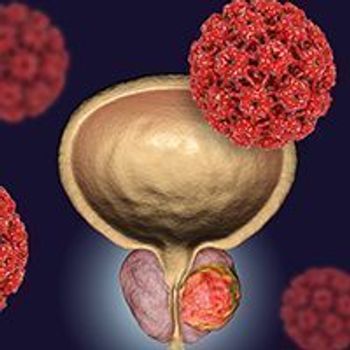
The combination of neoadjuvant tislelizumab and nab-paclitaxel elicited a high rate of pathologic complete response in patients with muscle-invasive bladder cancer, according to preliminary findings from the phase 2 TRUCE-01 trial.

The combination of nivolumab plus ipilimumab was not found to significantly improve overall survival over standard-of-care chemotherapy when used in the first-line treatment of patients with unresectable or metastatic urothelial carcinoma with a PD-L1 expression of 1% or higher.
The addition of isatuximab-irfc to carfilzomib and dexamethasone resulted in a significant improvement in progression-free survival vs carfilzomib plus dexamethasone alone in patients with relapsed or refractory multiple myeloma.

TROP-2 and Nectin-4, surface cell targets of sacituzumab govitecan and enfortumab vedotin, respectively, are highly expressed in urothelial cancer and variant histology bladder cancer.

Infigratinib yielded notable activity and tolerability in patients with localized upper tract urothelial carcinoma harboring FGFR1/2/3 mutations.
The novel, near-infrared, prostate-specific membrane antigen-targeted fluorophore IS-002 was safe, well-tolerated, and allowed for enhanced intraoperative tumor detection in patients undergoing robotic prostatectomy.

Patients with low-grade non-muscle invasive bladder cancer who received the chemoablative reverse thermal gel UGN-102 were found to have maintained health-related quality-of-life outcomes.
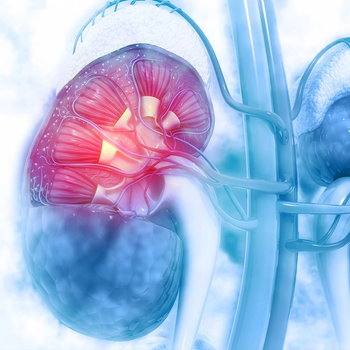
Neoadjuvant axitinib facilitated partial nephrectomy in patients with clear cell renal cell carcinoma and complex masses with an imperative indication for nephron-sparing surgery but no viable pathway to receive the procedure.