

Moshe Ornstein, MD, MA, discusses trials exploring second-line immunotherapy in patients who have progressed on immunotherapy, plus key clinical trial data on kidney cancer and other pressing areas of need for research in renal cell carcinoma.

Your AI-Trained Oncology Knowledge Connection!
Moshe Ornstein, MD, MA, discusses trials exploring second-line immunotherapy in patients who have progressed on immunotherapy, plus key clinical trial data on kidney cancer and other pressing areas of need for research in renal cell carcinoma.

New FDA guidelines reflect improvements in medical science over the past 6 years and are designed to facilitate continued advancement in cancer prevention, detection, research, and patient care.
The MEK inhibitor trametinib reduced the risk of disease progression or death by 52% compared with current standard-of-care therapies in patients with relapsed or persistent low-grade serous ovarian carcinoma, making it the potential new SOC for this patient population.
Sarah Sunshine, MD, discusses the management of keratopathy associated with belantamab mafodotin treatment in patients with multiple myeloma and explained why ophthalmologists play a vital role in addressing these adverse effects.
William D. Tap, MD, discusses the key challenges faced in the treatment of patients with soft tissue sarcoma and efforts being made to overcome them.
Ajai Chari, MD, discusses the safety and efficacy of talquetamab plus daratumumab in heavily pretreated patients with multiple myeloma, initial data from phase 1b TRIMM-2 trial, and the potential to move the combination into earlier lines of therapy.

Jonathan Chernoff, MD, PhD, Cancer Center Director at Fox Chase Cancer Center, was recently awarded a $50,000 grant from the Pennsylvania Breast Cancer Coalition.
Early data have demonstrated poor outcomes for patients with NRG1 fusions, and limited efficacy with available treatments represents a need for the development of novel therapeutic agents.

From early phase 1/2 to pivotal phase 3 data, the 2021 San Antonio Breast Cancer Symposium was full of exciting research with selective estrogen receptor degraders, CDK4/6 inhibitors, and antibody-drug conjugates.
The FDA has approved ciltacabtagene autoleucel for the treatment of adult patients with relapsed and/or refractory multiple myeloma following 4 or more prior lines of therapy, including a proteasome inhibitor, an immunomodulatory agent, and an anti-CD38 monoclonal antibody.

Targeted therapies, specifically those agents directed at mutated proteins and aberrant protein-to-protein interactions, have been shown to improve survival among patients with relapsed or refractory acute myeloid leukemia.

Although checkpoint inhibitors and bispecific antibodies have come to represent clinical oncology’s fourth leg of treatment—immunotherapy—there remains much to explore within lymphoma.
A supplemental new drug application has been submitted to the FDA seeking the approval of ibrutinib for the treatment of pediatric and adolescent patients aged 1 year and older with chronic graft-vs-host disease following failure of 1 or more lines of systemic therapy.

The European Medicines Agency’s Committee for Medicinal Products for Human Use has confirmed its recommendation to approve the use of enfortumab vedotin in adult patients with locally advanced or metastatic urothelial cancer who have received prior platinum-based chemotherapy and a PD-1/PD-L1 inhibitor.
The FDA has granted priority review to a supplemental biologics license application for the combination of nivolumab and chemotherapy in the neoadjuvant treatment of patients with resectable non–small cell lung cancer.
One of the primary goals of the ECOG-ACRIN Health Equity Committee is to continue addressing disparities that limit the representation of minority populations in cancer clinical trials.
The emergence of novel agents, including CAR T-cell therapies and antibody-drug conjugates, plus existing options such as chemoimmunotherapy and bone-marrow transplant, have combined to raise questions about the sequencing of these treatments in patients with diffuse large B-cell lymphoma.
A clinical algorithm-based approach that was developed to improve fractional polynomial model selection utilized additional criteria based on face validity, predictive accuracy, and expert opinion, which improved the plausibility of survival outcomes in patients with renal cell carcinoma.
A real-world analysis showed that patients with advanced renal cell carcinoma in the United States who received the combination of axitinib and pembrolizumab derived similar efficacy with the regimen as those who had received it in randomized clinical trials.
Improving patient outcomes is top of mind for investigators at John Theurer Cancer Center in Hackensack, New Jersey.

The European Medicines Agency’s Committee for Medicinal Products for Human Use has recommended the approval of nivolumab and ipilimumab for use in the frontline treatment of adult patients with unresectable advanced, recurrent or metastatic esophageal squamous cell carcinoma with a PD-L1 expression of 1% or higher.
Nima Sharifi, MD, PLCO, discusses the results of the prostate cancer cohort in the PLCO trial and how PAGln could be linked to patients eventually diagnosed with lethal prostate cancer.
Cancer Treatment Centers of America®, Phoenix, has achieved Magnet® recognition by the American Nurses Credentialing Center, positioning the cancer specialty hospital among a select group – just 8-10 percent of hospitals nationwide – to achieve this honor.
The European Medicines Agency’s Committee for Medicinal Products for Human Use has granted a positive opinion to the use of nivolumab in combination with chemotherapy in the first-line treatment of adult patients with unresectable advanced, recurrent, or metastatic esophageal squamous cell carcinoma with a PD-L1 expression of 1% or higher.

The European Medicines Agency’s Committee for Medicinal Products for Human Use has recommended the approval of nivolumab for use as an adjuvant treatment in adult patients with muscle-invasive urothelial carcinoma with a PD-L1 expression of at least 1% on tumor cells, who are at a high risk of recurrence following radical resection.
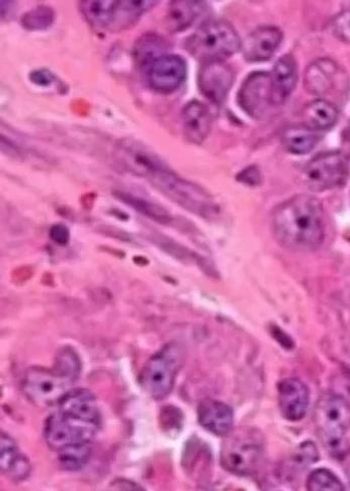
Version 1.2022 of the National Comprehensive Cancer Network guidelines now include ripretinib as a category 1 fourth-line treatment option for patients with advanced gastrointestinal stromal tumor and as an additional TKI for consideration prior to surgery.
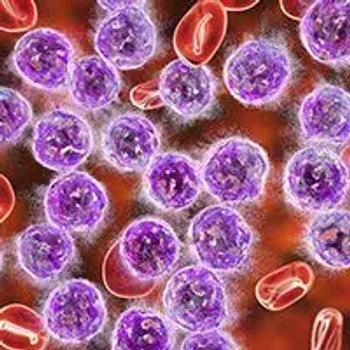
Light-chain amyloidosis is a rare plasma cell disorder that involves the production of a misfolded amyloidogenic light chain by a plasma cell clone that deposits in various organs leading to organ failure.

The FDA approvals of immunotherapy-based combinations as frontline therapy led to a substantial increase in their use in patients with metastatic renal cell carcinoma in the community setting, leading to a greater use of TKI monotherapy as second- and third-line therapies.
The addition of atezolizumab to neoadjuvant gemcitabine and cisplatin generated a high rate of non–muscle-invasive downstaging following radical cystectomy, which correlated with improved relapse-free survival and overall survival in patients with muscle-invasive bladder cancer, according to data from a phase 2 trial.
“I don’t intend to rest on any laurels as thereis still much more to be done.”