
The field of targeted therapy for patients with non–small cell lung cancer has grown exponentially in recent years, with inhibitors for RET, MET exon 14 skipping, and KRAS G12C mutations transforming the paradigm.

Your AI-Trained Oncology Knowledge Connection!
The field of targeted therapy for patients with non–small cell lung cancer has grown exponentially in recent years, with inhibitors for RET, MET exon 14 skipping, and KRAS G12C mutations transforming the paradigm.

The immunotherapy Leukocyte interleukin followed by surgery and radiotherapy, without chemotherapy, significantly improved overall survival compared with standard of care alone in the treatment of patients with advanced primary squamous cell carcinoma of the head and neck.
Next-generation sequencing plays a critical role in the diagnosis of patients with myeloid malignancies, but it also plays a necessary role in the identification of passenger mutations and subclonal events that go beyond founding drivers.

The European Commission has approved the combination of nivolumab plus ipilimumab for use in adult patients with mismatch repair deficient or microsatellite instability–high metastatic colorectal cancer following previous fluoropyrimidine-based combination chemotherapy.

Results from a partnership to address disparities and enhance the quality of breast cancer care atMemphis-based West Cancer Center & Research Institute were announced today.

The European Commission has approved pembrolizumab plus platinum- and fluoropyrimidine-based chemotherapy for the frontline treatment of patients with locally advanced unresectable or metastatic carcinoma of the esophagus or HER2-negative gastroesophageal junction adenocarcinoma whose tumors have PD-L1 expression.

Practice-validating trials in cervical cancer, endometrial cancer, and ovarian cancer were the focus of the 2021 ASCO Annual Meeting in gynecologic oncology, each carrying relevant implications on extended therapy, surveillance, and biomarker testing.

A phase 1 study evaluating the off-the-shelf cell therapy CYNK-001 has expanded to include patients with relapsed/refractory acute myeloid leukemia after a case of conversion to minimal residual disease negativity at its highest dose level.
The combination of balixafortide and eribulin did not significantly improve objective response rate over eribulin alone in the treatment of patients with HER2-negative, locally recurrent or metastatic breast cancer, missing the co-primary end point of the phase 3 FORTRESS study.

The FDA has granted a breakthrough therapy designation orelabrutinib for the treatment of patients with relapsed/refractory mantle cell lymphoma.

The combination of the targeted cancer vaccine galinpepimut-S plus nivolumab resulted in a median overall survival of 35.4 weeks in patients with macroscopic deposits of malignant pleural mesothelioma who had received treatment for at least 1 month.
Streamlined processes afforded by in-house genomic testing have the potential to provide clinical, collaborative, and financial benefits.
Axicabtagene ciloleucel significantly improved event-free survival by 60% over chemotherapy plus stem cell transplant in the second-line treatment of patients with relapsed or refractory large B-cell lymphoma, meeting the primary end point of the phase 3 ZUMA-7 trial.

Thomas G. Martin, MD, speaks to the FDA approval of isatuximab, carfilzomib, and dexamethasone, and potential future directors for isatuximab.

The combination of cabozantinib and atezolizumab was found to significantly improve progression-free survival compared with sorafenib when used in the first-line treatment of patients with advanced hepatocellular carcinoma, meeting a primary end point of the phase 3 COSMIC-312 trial.

Modified fluorouracil, oxaliplatin, and irinotecan elicited encouraging responses and an acceptable toxicity profile as a frontline treatment for patients with unresectable gallbladder cancer

Joseph Sparano, MD, will lead Hematology and Medical Oncology and will be Deputy Director of The Tisch Cancer Institute.

Ehab Atallah, MD, spotlights recent updates, emerging approaches, and next steps for research in leukemia and lymphoma.
Gilberto Lopes, MD, discusses the latest developments made in the treatment of patients with non–small cell lung cancer whose tumors harbor genetic alterations and the clinical implications of recent regulatory approvals.
The European Medicines Agency’s Committee for Medicinal Products for Human Use has recommended the approval of nivolumab for the adjuvant treatment of adult patients with esophageal or gastroesophageal junction cancer who have residual pathologic disease after previous neoadjuvant chemoradiotherapy.

The European Medicines Agency’s Committee for Medicinal Products for Human Use has issued a positive opinion in favor of granting conditional marketing authorization to the combination of tafasitamab-cxix and lenalidomide, followed by single-agent tafasitamab, for the treatment of adult patients with relapsed or refractory diffuse large B-cell lymphoma who are not candidates for autologous stem cell transplant.
Eric Klein, MD, discusses the promise of VERU-111 in patients with metastatic CRPC and other research efforts that are generating excitement in the paradigm.

The European Commission has granted approval to cemiplimab for the treatment of patients with locally advanced or metastatic non–small cell lung cancer whose tumor cells have at least 50% PD-L1 expression and no EGFR, ALK, or ROS1 aberrations and are ineligible for definitive chemoradiation.

The European Medicines Agency’s Committee for Medicinal Products for Human Use has recommended that idecabtagene vicleucel receive conditional marketing authorization for use in adult patients with relapsed and refractory multiple myeloma who have received at least 3 prior therapies, including an immunomodulatory agent, a proteasome inhibitor, and a CD38-targeted antibody, and have progressed on their last therapy.

The FDA has granted a breakthrough therapy designation to adagrasib for use as a potential therapeutic option for patients with KRAS G12C–mutated non–small cell lung cancer following previous systemic therapy.

Albert Einstein Cancer Center, Albert Einstein College of Medicine, and Montefiore Health System announced that Lauren Hackett, MPA, has been appointed the deputy director of administration of AECC and associate vice president of cancer medicine at Montefiore Medicine.

The addition of sintilimab to chemotherapy significantly improved overall survival over chemotherapy alone when used as a first-line treatment in patients with unresectable, locally advanced, recurrent, or metastatic esophageal squamous cell carcinoma, meeting the primary end point of the phase 3 ORIENT-15 trial.

Neal D. Shore, MD, FACS, discusses the design of the phase 3 ARAMIS trial in nonmetastatic castration-resistant prostate cancer.

In a 13 to 4 vote, the FDA’s Oncologic Drugs Advisory Committee chose to hold off on a decision regarding accelerated approval for retifanlimab for the treatment of patients with locally advanced or metastatic squamous carcinoma of the anal canal who have progressed on or are intolerant of platinum-based chemotherapy.
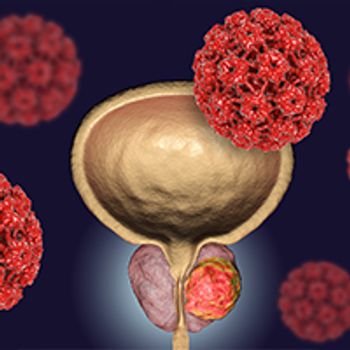
The Chinese National Medical Products Administration has granted conditional approval to olaparib for use as a monotherapy in the treatment in adult patients with germline or somatic BRCA-mutated, metastatic castration-resistant prostate cancer who have progressed after previous treatment that included a new hormonal agent like abiraterone acetate or enzalutamide.