


Hematologic Oncology
Latest News
Advertisement
Latest Videos
CME Content































Advertisement
More News
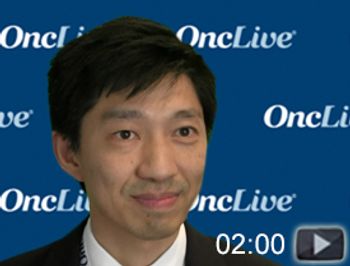
Christopher S. Seet, MD, PhD, hematologist and oncologist, UCLA, discusses aspects of treatment discontinuation in chronic myeloid leukemia (CML).
Although several newer JAK inhibitors are being investigated, such as pacritinib, momelotinib, and the recently FDA-approved fedratinib, most combinations are being explored in combination with ruxolitinib.
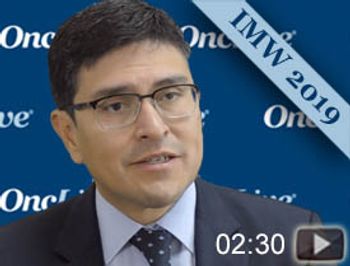
Jorge J. Castillo, MD, clinical director, Bing Center for Waldenström Macroglobulinemia, physician, associate professor of medicine, Harvard Medical School, Dana-Farber Cancer Institute, discusses the results of a multicenter, prospective, phase II study of venetoclax in patients with previously treated Waldenstrom macroglobulinemia.
The rise of oral targeted therapies and novel combinations is transforming the paradigm for the frontline treatment of patients with chronic lymphocytic leukemia regardless of age, and ongoing phase III trials are likely to generate more modifications.
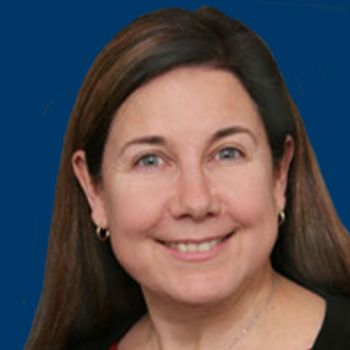
Laura C. Michaelis, MD, discusses the currently approved JAK inhibitors and the future landscape for myelofibrosis, as well as treatment considerations for graft-versus-host disease.
Early results from a prospective postmarketing assessment showed that tisagenlecleucel induced responses similar to those seen in pivotal trials for children and adolescents with B-cell acute lymphoblastic leukemia and adults with diffuse large B-cell lymphoma.
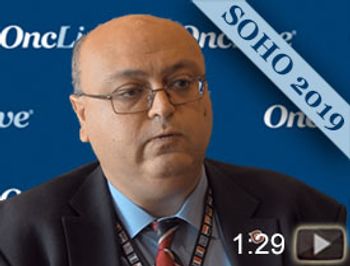
Basem William, MD, MRCP, FACP, discusses the preliminary results of the phase II trial of brentuximab vedotin and lenalidomide in relapsed/refractory cutaneous and peripheral T-cell lymphomas.
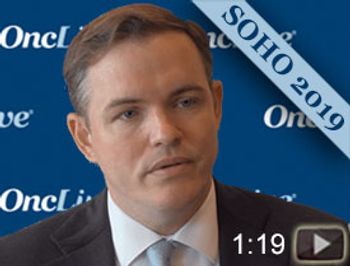
Jason Westin, MD, discusses patient responses with relapsed/refractory diffuse large B-cell lymphoma in the JULIET trial who were treated with tisagenlecleucel.
Tisagenlecleucel maintained strong rates of response and duration of response in adults with relapsed/refractory diffuse large B-cell lymphoma, according to the latest findings from the phase II JULIET study presented at the 2019 SOHO Annual Meeting.
John F. DiPersio, MD, PhD, discusses the challenges in research surrounding targeted cellular therapies for acute myeloid leukemia
The use of checkpoint inhibitors prior to haploidentical stem cell transplantation improved progression-free survival and reduced the risk for relapse for patients with relapsed or refractory Hodgkin lymphoma, according to results from a retrospective study presented at the 2019 SOHO Annual Meeting.

Maintenance therapy with CC-486 (oral azacitidine) led to a highly statistically significant and clinically meaningful improvement in overall survival compared with placebo in patients with newly diagnosed acute myeloid leukemia who achieved first complete response or CR with incomplete blood count recovery with induction therapy.

Novel strategies are needed to enhance the efficacy of CAR T-cell therapies in patients with acute lymphoblastic leukemia, including new constructs that target more than 1 antigen.
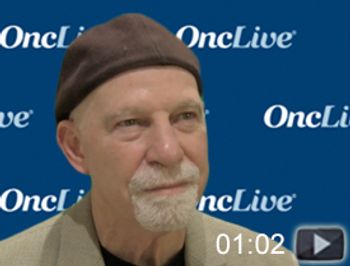
Steven T. Rosen, MD, Irell & Manella Cancer Center Director's Distinguished Chair, Morgan & Helen Chu Director's Chair of the Beckman Research Institute, provost and chief scientific officer, director of the Comprehensive Cancer Center, Beckman Research Institute, and Irell & Manella Graduate School of Biological Sciences, and professor in the Department of Hematology and Hematopoietic Cell Transplantation, at City of Hope, discusses the emergence of novel therapies and the incorporation of immuno-oncology (IO) drugs in hematologic malignancies.
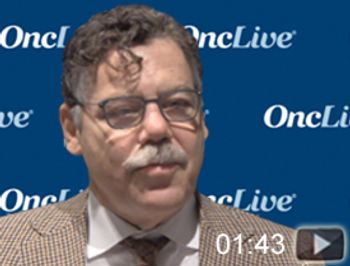
Mitchell R. Smith, MD, PhD, professor of medicine, George Washington University, associate center director for clinical investigations, Division of Hematology and Oncology, GW Cancer Center, discusses emerging therapeutic approaches in indolent lymphoma.
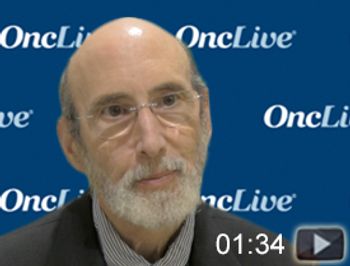
David S. Snyder, MD, associate chair, Department of Hematology and Hematopoietic Cell Transplantation, professor, Hematology and Hematopoietic Cell Transplantation, and hematologist/oncologist, City of Hope, discusses ongoing research in myelofibrosis.
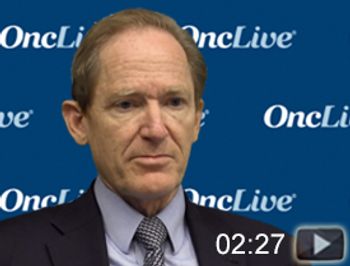
Mark James Levis, MD, PhD, program leader of Hematologic Malignancies and Bone Marrow Transplant Program at Sidney Kimmel Comprehensive Cancer Center, and professor of oncology, Johns Hopkins Medicine, discusses an analysis of gilteritinib in patients with relapsed/refractory FLT3-mutated acute myeloid leukemia harboring other common co-mutations or a high FLT3-internal tandem duplication allelic ratio.
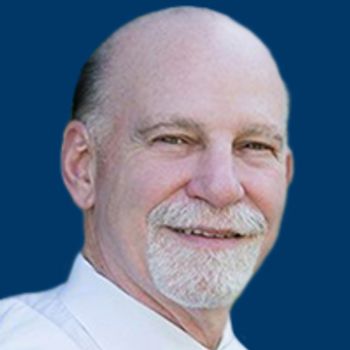
Steven T. Rosen, MD, discusses the rapid evolution in hematologic cancer treatment and highlighted challenges that have recently emerged.
Experts from City of Hope share insight on some of the pivotal research being conducted at their institution.
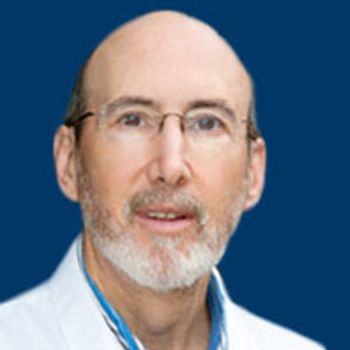
David S. Snyder, MD, highlights agents currently undergoing clinical trials for polycythemia vera and myelofibrosis as well as how to most effectively treat patients using transplantation.
Advertisement
Advertisement
Trending on OncLive
1
Long-Term Cilta-Cel Data Show Low Rates of PFS Events in Standard-Risk R/R Myeloma
2
FDA Updates Axi-Cel Label to Remove Limitation of Use in R/R PCNSL
3
Real-World Data Support Clinical Benefit With Lifileucel in Previously Treated Advanced Melanoma
4
Single-Center, Retrospective Data Show Low Rate of Lifileucel Infusion Following Referral in Advanced Melanoma
5