



Hematologic Oncology
Latest News
Advertisement
Latest Videos




CME Content































Advertisement
More News
Robin Foà, MD, discusses results from the GIMEMA LAL2317 sequential chemotherapy-blinatumomab frontline trial, where experts evaluated the efficacy of blinatumomab in increasing the early MRD (minimal residual disease) negativity rate.
Robin Foà, MD, leads a discussion on the primary takeaways from the GIMEMA LAL2116, D-ALBA trial, particularly the prognostic impact of the IKZF1-plus genotype and the Ikaros mutation.
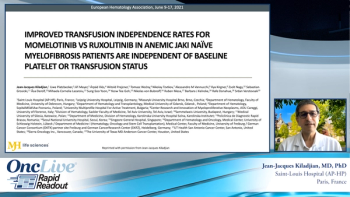
Jean-Jacques Kiladjian, MD, PhD, describes updated results presented at the European Hematology Association 2021 Virtual Congress from the phase 3 SIMPLIFY-1 trial of momelotinib vs ruxolitinib in JAK inhibitor–naïve patients with myelofibrosis.
Elias Jabbour, MD, highlights early findings from a phase 2 study of the combination of ponatinib and blinatumomab in Philadelphia chromosome-positive (Ph+) acute lymphoblastic leukemia (ALL).
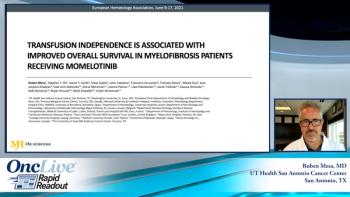
Ruben Mesa, MD, Director of UT Health San Antonio MD Anderson Cancer Center, presents data from the 2021 European Hematology Association Virtual Congress from the SIMPLIFY-1 and SIMPLIFY-2 trials of patients with myelofibrosis who were treated with momelotinib.
Jorge Cortes, MD, reviews the results of the OPTIC trial: a dose-optimization study of 3 starting doses of ponatinib.

Sandy Wong, MD, discusses treatment goals for patients with systemic amyloidosis.
Experts in hematology oncology consider unmet needs for adult patients with relapsed/refractory ALL and reflect on the potential impact that FDA approval of CAR T cell therapy would have on the treatment landscape.
Thought leaders in the management of ALL discuss the use of clinical endpoints like CR, CRi, and CRh as they relate to the ZUMA-3 trial of CAR T cell therapy, and lead trial author Bijal Shah, MD, MS, comments on the future application of MRD status.
Primary investigator Bijal Shah, MD, MS, shares insights into the efficacy results of the ZUMA-3 trial of chimeric antigen receptor (CAR) T-cell therapy for acute lymphocytic leukemia (ALL), and Eunice Wang, MD, reviews the trial’s key safety data.
Leukemia experts provide an overview of the ZUMA-3 trial of chimeric antigen receptor (CAR) T-cell therapy in adult patients with relapsed/refractory acute lymphocytic leukemia (ALL) by discussing the overall study design and patient population.
An expert in the management of myeloproliferative neoplasms, Jamile Shammo, MD, FASCP, FACP, leads a discussion on best practices for assessing response and monitoring for progression.
Pankit Vachhani, MD, reviews recent changes to the NCCN Guidelines, highlighting the addition of luspatercept for the treatment of primary myelofibrosis.
An independent data monitoring committee has recommended that the phase 3 ARMADA 200 trial examining devimistat plus high-dose cytarabine and mitoxantrone in patients with relapsed or refractory acute myeloid leukemia continue as planned.

The FDA has approved asparaginase erwinia chrysanthemi (recombinant)-rywn (Rylaze) as part of a chemotherapy regimen to treat pediatric and adult patients with acute lymphoblastic leukemia and lymphoblastic lymphoma who are allergic to the E. coli-derived asparaginase products.

Julian Adams, PhD, discusses research efforts surrounding GDA-201, including details of the cryo buffer that the company developed in order to efficiently freeze and recover the GDA-201 cells.

Eunice Wang, MD, discusses the KOMET-001 trial, the potential for KO-539 to address an unmet need in acute myeloid leukemia, and the future of menin inhibition in this disease.
Julian Adams, PhD, discusses approaches to cell therapy, and the potential of omidubicel as an alternative to bone marrow transplant in leukemias and lymphomas.
Key experts in hematology oncology discuss the use of MRD status to assess therapeutic response and guide treatment decisions in patients with relapsed/refractory ALL.
Eunice Wang, MD and Bijal Shah, MD, MS, begin with an overview of novel agents and emerging therapeutic approaches for the treatment of acute lymphoblastic leukemia.

The fixed combination of daunorubicin and cytarabine continued to demonstrate improved overall survival vs 7+3 chemotherapy in older patients with newly diagnosed high-risk or secondary acute myeloid leukemia.

Next-generation sequencing plays a critical role in the diagnosis of patients with myeloid malignancies, but it also plays a necessary role in the identification of passenger mutations and subclonal events that go beyond founding drivers.
Key opinion leaders in the management of myeloproliferative neoplasms review factors to consider when selecting treatments for patients and highlight the role of fedratinib in the first- or second-line settings.
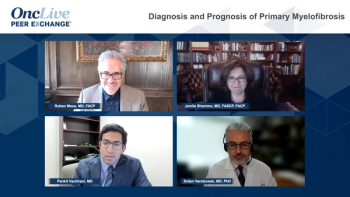
A panel of experts in myeloid malignancies begins with a discussion on risk assessment criteria, next-generation sequencing, and symptom burden questionnaires to assess prognosis for patients with myelofibrosis.

A phase 1 study evaluating the off-the-shelf cell therapy CYNK-001 has expanded to include patients with relapsed/refractory acute myeloid leukemia after a case of conversion to minimal residual disease negativity at its highest dose level.
Advertisement
Advertisement
Trending on OncLive
1
Long-Term Cilta-Cel Data Show Low Rates of PFS Events in Standard-Risk R/R Myeloma
2
Real-World Data Support Clinical Benefit With Lifileucel in Previously Treated Advanced Melanoma
3
FDA Updates Axi-Cel Label to Remove Limitation of Use in R/R PCNSL
4
Dr Riedell on the Long-Term Efficacy of Tisa-Cel in R/R Follicular Lymphoma
5