






Lung Cancer
Latest News
Advertisement
Latest Videos







CME Content

































Advertisement
More News
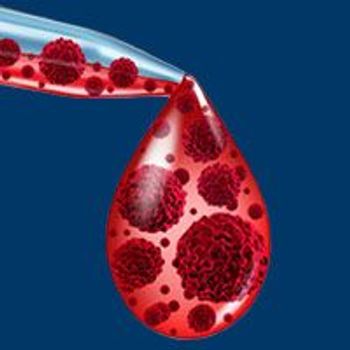
Study findings could be developed into less-invasive method.
Dr Duma discusses the leading causes of lung cancer in women, the ongoing failure to screen a sufficient number of women for lung cancer, and how gender bias interferes with treatment.

Neoadjuvant treatment with durvalumab plus platinum-based chemotherapy led to a statistically significant improvement in pathologic complete response and major pathologic response compared with chemotherapy alone in patients with resectable non–small cell lung cancer, according to findings from a planned interim analysis of the phase 3 AEGEAN trial.

A brief review of real-world data behind molecular profiling in non–small cell lung cancer, followed by a discussion on barriers to testing and uptake.
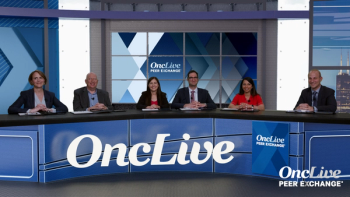
Expert panelists share insight on molecular testing practices across all subtypes of non–small cell lung cancer to optimally inform treatment decisions.

Charles Rudin, MD, PhD, explains the prognostic staging systems used for small cell lung cancer.

Drs Owonikoko and Weiss provide a brief overview of small cell lung cancer and the vital importance of an early diagnosis to improve patient outcomes.

Expert oncologist John Heymach, MD, PhD, addresses the potential role of immunotherapy in concomitant KRAS/TP53-mutated NSCLC.
Insight on the potential role of immunotherapy in patients with NSCLC and concomitant KRAS/STK11 or KRAS/KEAP1 mutations.

The combination of amivantamab-vmjw and lazertinib produced encouraging responses with acceptable safety in patients with EGFR-mutated non–small cell lung cancer who progressed on osimertinib and platinum-based chemotherapy.

HPN328, a novel half-life extended DLL3-targeting T-cell engager, demonstrated clinical activity and tolerability in patients with pretreated small cell lung cancer and other neuroendocrine tumors, according to findings from a phase 1/2 study (NCT04471727).

The United Kingdom’s Medicines and Healthcare Products Regulatory Agency accepted for review the marketing authorization application for aumolertinib for the first-line treatment of adult patients with locally advanced or metastatic non–small cell lung cancer with activating EGFR mutations and locally advanced/metastatic EGFR T790M mutation–positive non–small cell lung cancer.

The US Preventive Services Task Force updated its lung cancer screening guidelines in 2021 to include more members of vulnerable populations, including African Americans, women, and the LGBTQ community.

The European Commission has approved capmatinib as a single agent for the treatment of patients with MET exon14 skipping–altered advanced non–small cell lung cancer who require systemic therapy following prior treatment with immunotherapy and/or platinum-based chemotherapy.
The FDA has granted an orphan drug designation to PT217 for use as a potential therapeutic option for patients with small cell lung cancer.
Targetable alterations including BRAF V600E, EGFR exon 20 insertions, KRAS G12C mutations, MET exon 14 alterations, NTRK and RET rearrangements have taken up recent focus for investigators as data are pushing novel agents through the regulatory processes.
John Heymach, MD, PhD, discusses the poor outcomes that have been observed with immunotherapy in patients with NSCLC and EGFR mutations or ALK rearrangements.
Expert perspectives on the prevalence of molecular profiling in NSCLC, and the unmet needs and barriers preventing the uptake of routine molecular testing.

The combination of galinpepimut-S and nivolumab was found to extend survival in patients with malignant pleural mesothelioma who were either refractory to, or who had relapsed after, at least 1 line of standard therapy.

The European Commission has approved atezolizumab for use as an adjuvant treatment following complete resection and platinum-based chemotherapy in adult patients with non–small cell lung cancer and a high risk of recurrence whose tumors do not have EGFR mutations or ALK alterations but have a PD-L1 expression of 50% or higher.
The FDA has accepted for review a new supplemental biologics license application seeking approval of pembrolizumab in the adjuvant treatment of patients with stage IB to IIIA non–small cell lung cancer after complete surgical resection.
A brief discussion on insufficient tissue results in molecular profiling for NSCLC and how this can be avoided or addressed via liquid biopsy.
Expert oncologist John Heymach, MD, PhD, provides comprehensive insight on testing strategies for actionable mutations in NSCLC.
Adding toripalimab to chemotherapy in the frontline setting demonstrated improved progression-free survival vs placebo plus chemotherapy in patients with advanced non–small cell lung cancer without EGFR or ALK mutations, regardless of PD-L1 status.

Lawrence E. Feldman, MD, discusses shifting standards of care in small cell lung cancer, plus the implications of the phase 3 LEAP-006 and LEAP-008 trials in non–small cell lung cancer.
Advertisement
Advertisement
Trending on OncLive
1
Single-Center, Retrospective Data Show Low Rate of Lifileucel Infusion Following Referral in Advanced Melanoma
2
Real-World Data Support Clinical Benefit With Lifileucel in Previously Treated Advanced Melanoma
3
Long-Term Cilta-Cel Data Show Low Rates of PFS Events in Standard-Risk R/R Myeloma
4
Dr Riedell on the Long-Term Efficacy of Tisa-Cel in R/R Follicular Lymphoma
5