





Lung Cancer
Latest News
Advertisement
Latest Videos







CME Content































Advertisement
More News

Drs Fernando C. Santini and Hatim Hussain explain how they approach testing and treatment of patients with TRK fusion at diagnosis and progression in non–small cell lung cancer.
A panel of lung cancer experts illustrate their personal clinical experience with treatment selection and sequencing for treating patients who have NTRK fusions.

The efficacy of targeted therapies for patients with lung cancer relies on detailed testing approaches found only in DNA- and RNA-based sequencing assays to identify specific mutations.
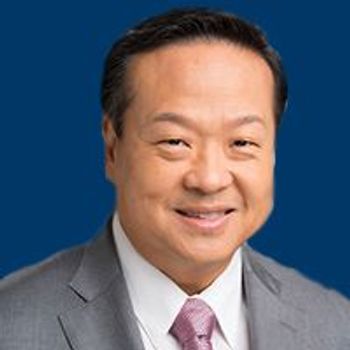
Edward Kim, MD, MBA, discussed the facets of each presentation from the meeting, featuring other emerging targeted therapies in NSCLC, biomarker testing in the space, frontline immunotherapy in NSCLC, and the current management of small cell lung cancer.
The treatment landscape continues to expand across non–small cell lung cancer, with the FDA approvals of multiple agents, including targeted therapies such as sotorasib and lorlatinib.

The FDA has granted a breakthrough therapy designation to repotrectinib for the treatment of patients with ROS1-positive metastatic non–small cell lung cancer who have been previously treated with one ROS1 TKI and have not received prior platinum-based chemotherapy.

The anti-TIGIT immunotherapy tiragolumab in combination with atezolizumab did not improve progression-free survival over atezolizumab alone in the first-line treatment of patients with PD-L1–high locally advanced or metastatic non–small cell lung cancer.
Misako Nagasaka, MD, PhD, provides an overview of clinical trial data on treatments for NTRK fusion–positive lung cancer.
Benjamin Levy, MD, explains KRAS G12C mutations in non–small cell lung cancer, and Hatim Husain, MD, provides insight into the mechanism of action of G12C inhibitors.
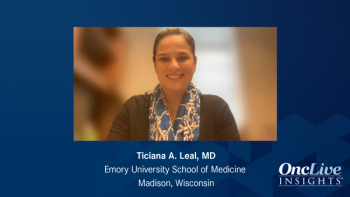
Considerations for optimizing the use of molecular testing in advanced non–small cell lung cancer, addressing insufficient tissue collection and liquid biopsy approaches.

The hallmarks of lung cancer diagnosis and treatment are evolving, evidenced by increases in minimally invasive surgery, and immunotherapy combinations, as well as targeted therapies for rare molecular subsets.
Expert Ticiana Leal, MD, shares her perspective on routine molecular testing practices in advanced non–small cell lung cancer.

Although molecular biomarkers are becoming increasingly relevant in cancer care, community oncologists confront a plethora of challenges in translating research findings into practice.
Dr Martin Dietrich provides an overview of how to treat MET exon 14 skipping mutations in non–small cell lung cancer.
Dr Misako Nagasaka reviews clinical trial data presented at ESMO 2021 on therapies for NSCLC harboring HER2 exon 20 mutations.
Mark Awad, MD, PhD, discusses how the approval of nivolumab opens the door for the new regimen to become a backbone for future treatment strategies.
Dr Fernando Santini explains EGFR exon 20 insertion mutations in NSCLC and the best approaches for treating these cases.
A discussion on EGFR mutations in non-small cell lung cancer and the combination treatment strategies for sensitizing mutations.

Frank Weinberg, MD, PhD, discusses the treatment options in non–small cell lung cancer harboring NTRK fusions.

Closing out her discussion on the management of actionable mutations in NSCLC, Meghan Mooradian, MD, highlights the detection and implications of KRAS/TP53 mutations.

Consolidation therapy with durvalumab and either oleclumab or monalizumab showed increased clinical benefits in patients with unresectable stage III non–small cell lung cancer.

Lung cancer remains the most common cause of cancer death in the United States.

Chao H. Huang, MD, FACP, discusses ongoing research around the use of ALK inhibitors for non–small cell lung cancer.
The European Medicines Agency’s Committee for Medicinal Products for Human Use has adopted a positive opinion supporting the approval of adjuvant atezolizumab, after complete resection and platinum-based chemotherapy, in adult patients with non–small cell lung cancer with a high risk of recurrence and whose tumors express PD-L1 of 50% or higher and do not harbor EGFR mutations or ALK alterations.
Expert perspective on the poor outcomes observed with immunotherapy in NSCLC with STK11 or KEAP1 mutations, alone or in combination with KRAS alterations.
Advertisement
Advertisement
Trending on OncLive
1
Long-Term Cilta-Cel Data Show Low Rates of PFS Events in Standard-Risk R/R Myeloma
2
FDA Updates Axi-Cel Label to Remove Limitation of Use in R/R PCNSL
3
Nonresponse to Bridging Therapy and Peak ALC After Cilta-Cel Are Associated With Neurotoxicity, NRM in Myeloma
4
Real-World Data Support Clinical Benefit With Lifileucel in Previously Treated Advanced Melanoma
5