





Prostate Cancer
Latest News
Advertisement
Latest Videos








CME Content































Advertisement
More News

William K. Oh, MD, chief, Division of Hematology and Medical Oncology, professor of Medicine and Urology, Mount Sinai School of Medicine, discusses AR-targeted therapy and chemotherapy for poor prognostic patients with castration-resistant prostate cancer.
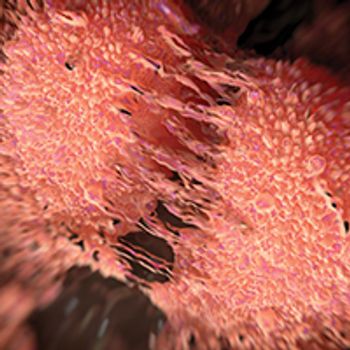
A recent phase II trial demonstrated that the combination of docetaxel-based chemotherapy and dexamethasone showed significantly high PSA responses compared with previous studies in patients with CRPC.

The American Society of Clinical Oncology and Cancer Care Ontario have jointly updated their guideline for using brachytherapy treatment for patients with newly diagnosed prostate cancer who require or choose active treatment and are not considering, or are not suitable for, active surveillance.

Oliver Sartor, MD, a medical oncologist at the Tulane University School of Medicine, discusses the analysis of African-American patients receiving sipuleucel-T (Provenge) compared with Caucasians with metastatic castration-resistant prostate cancer.

The American Urological Association, in collaboration with the Society of Abdominal Radiology, convened for a Prostate Cancer Disease Focused Panel to conduct a literature review and create consensus statements regarding the role of prostate magnetic resonance imaging (MRI) and MRI-targeted biopsy in patients with a prior negative biopsy.

Michael Brawer, MD, vice president of Medical Affairs, Myriad Genetic Laboratories, discusses the Prolaris genetic test in predicting prostate cancer aggressiveness in African-American men.
Raoul S. Concepcion, MD, discusses the new era of molecular testing and screening and how it has impacted the field of prostate cancer thus far.

Michael Barkoukis, MD, and Tim Sidor, MD, started SouthWest Urology of Cleveland, OH, in 1982 from scratch with $100,000 in borrowed capital, a box of pens, and a copy machine.

Andrew Vickers, PhD, attending research methodologist at Memorial Sloan Kettering Cancer Center discusses studies of the controversial prostate-specific antigen (PSA) test for patients with prostate cancer.

Adam Scott Feldman, MD, MPH, urologist at Massachusetts General Hospital, assistant professor of Surgery, Harvard Medical School, discusses a study focused on active surveillance in men with prostate cancer under the age of 60.

The genomic landscape of metastatic castration-resistant prostate cancer is becoming increasingly well defined, with new clinical data emerging to clarify and, in many cases, support the use of PARP inhibitors.

Andrew J. Stephenson, MD, director for the Center of Urologic Oncology at the Cleveland Clinic discusses urinary, bowel, and sexual function following the management of localized prostate cancer.

Paul G. Corn, MD, PhD, associate professor, Department of Genitourinary Medical Oncology, Division of Cancer Medicine, The University of Texas MD Anderson Cancer Center, discusses the possibility of immunotherapy in patients with prostate cancer.

Stacy Loeb, MD, assistant professor of Urology and Population Health at New York University, discusses active surveillance for patients with low-risk prostate cancer.

Jim C. Hu, MD, professor of Urology, Weill Cornell Medical College, discusses the increase in the incidence of advanced prostate cancer in the United States.

Michael J. Morris, MD, Memorial Sloan Kettering Cancer Center, discusses the next steps regarding bone biomarkers for patients with prostate cancer.

Adam P. Dicker, MD, PhD, professor, chair, Department of Radiation Oncology, Sidney Kimmel Cancer Center, Thomas Jefferson University, discusses DNA sequencing for patients with prostate cancer.

Susan F. Slovin, MD, PhD, medical oncologist, Memorial Sloan Kettering Cancer Center, discusses the challenges of immunotherapy in prostate cancer.

James B. Yu, MD, associate professor, therapeutic oncology, director, Prostate and Genitourinary Cancer Radiotherapy Program, Yale Cancer Center, discusses the significance of the PROTECT study results in prostate cancer.

Christopher J. Kane, MD, discusses the challenges and impact of genetic testing on patients with prostate cancer.

Phil Febbo, MD, chief medical officer, Genomic Health, discusses the impact the Oncotype DX Genetic Prostate Score (GPS) has on patients with clinically low-risk prostate cancer.

Researchers may be able to predict which patients with CRPC are most likely to have poorer outcomes while undergoing targeted therapy, according to the results of the PREMIERE trial.

Gary Kirsh, MD, president of The Urology Group and the Large Urology Group Practice Association (LUGPA), discusses advancements in diagnosing patients with prostate cancer.

An investigational radiotracer that targets prostate-specific membrane antigen is being tested in patients with high-risk, recurrent, or metastatic prostate cancer to determine whether the novel agent can improve upon the sensitivity and specificity of conventional imaging.

James B. Yu, MD, associate professor, therapeutic oncology, director, Prostate and Genitourinary Cancer Radiotherapy Program, Yale Cancer Center, discusses moderate hypofractionation replacing the current standard of care for patients with prostate cancer.
Advertisement
Advertisement
Trending on OncLive
1
Long-Term Cilta-Cel Data Show Low Rates of PFS Events in Standard-Risk R/R Myeloma
2
Real-World Data Support Clinical Benefit With Lifileucel in Previously Treated Advanced Melanoma
3
FDA Updates Axi-Cel Label to Remove Limitation of Use in R/R PCNSL
4
Dr Riedell on the Long-Term Efficacy of Tisa-Cel in R/R Follicular Lymphoma
5