

EDP1503, an investigational monoclonal microbial product, was safe and well-tolerated when administered in combination with pembrolizumab (Keytruda), and mechanistically drove some of the patient responses seen in a phase 1/2 study.

Your AI-Trained Oncology Knowledge Connection!
EDP1503, an investigational monoclonal microbial product, was safe and well-tolerated when administered in combination with pembrolizumab (Keytruda), and mechanistically drove some of the patient responses seen in a phase 1/2 study.

Harry H. Yoon, MD, discusses the updated results of the phase 3 KEYNOTE-061 trial in advanced gastric/gastroesophageal junction (GEJ) cancer.

Irinotecan monotherapy demonstrated similar clinical activity and improved safety compared with capecitabine plus irinotecan in patients with advanced gallbladder cancer, representing a potential second-line treatment for frail patients.

Anant Ramaswamy, MD, discusses a phase 2 multicenter clinical trial evaluating the efficacy of capecitabine plus irinotecan versus irinotecan monotherapy in advanced gallbladder cancer.

Ghassan K. Abou-Alfa, MD, discusses the design and aim of the PROOF trial in advanced cholangiocarcinoma.

Ghassan K. Abou-Alfa, MD, discusses key eligibility criteria for the phase 3 PROOF trial in cholangiocarcinoma.

The safety and efficacy of maintenance olaparib in patients with BRCA1/2-mutated metastatic pancreatic cancer proved to be consistent irrespective of age, according to results of a subgroup analysis from the pivotal phase 3 POLO trial.

Yu Sunakawa, MD, PhD, further discusses the early real-world data from the DELIVER trial with nivolumab in patients with gastric/GEJ cancer and provided insight into what future analyses will examine.

Manish R. Patel, DO, further discusses next steps for entrectinib, as well as the need for genetic testing to identify uncommon gene rearrangements in GI malignancies.
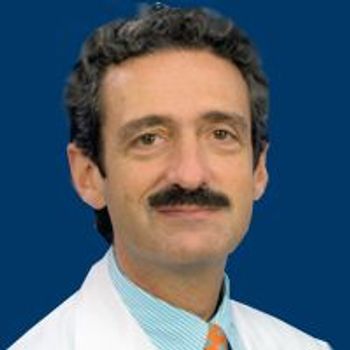
Bruno Sangro, MD, PhD, discusses the efficacy and safety findings from a study of combination durvalumab and tremelimumab, as well as the clinical need for alternative combination regimens in advanced hepatcellular carcinoma.

The regimen of liposomal irinotecan plus 5-fluorouracil/leucovorin plus oxaliplatin demonstrated a tolerable safety profile with promising antitumor activity when used as frontline treatment in patients with locally advanced or metastatic pancreatic ductal adenocarcinoma.

The combination of atezolizumab and bevacizumab demonstrated comparable clinical activity and safety versus sorafenib in older and younger patients with previously untreated, unresectable hepatocellular carcinoma.

Manish R. Patel, DO, discusses the role of entrectinib in gastrointestinal malignancies.
Bruno Sangro, MD, PhD, discusses the efficacy and safety findings from the long-term analysis of the CheckMate-459 trial in advanced hepatocellular carcinoma.

Bruno Sangro, MD, PhD, discusses the updated findings from the phase 3 CheckMate-459 trial, which evaluated the use of nivolumab and sorafenib in the treatment of patients with advanced hepatocellular carcinoma.

A number of influential clinical trials were presented during the 2020 ASCO Virtual Scientific Program, 8 of which Stephen Liu, MD, discusses in depth in a virtual presentation during the 2020 ASCO Direct Highlights webcast.

Yelena Y. Janjigian, MD, discusses updated results from the phase 2 DESTINY-Gastric01 trial in previously treated patients with HER2-positive gastric cancer.

Saad Z. Usmani, MD, FACP, discusses current challenges in patients with high-risk multiple myeloma.

Nilanjan Ghosh, MD, PhD, discusses efficacy results from the phase 2 PILOT trial in patients with high-risk relapsed/refractory B-cell non-Hodgkin lymphoma.

Justin Moyers, MD, discusses real-world data and sociodemographic factors from an early analysis of the National Cancer Database associated with the treatment of adjuvant immunotherapy in stage III melanoma.

Patients with breast cancer who harbor multiple PIK3A-mutant tumors achieved a higher clinical benefit from PI3Kα inhibition compared with single mutant tumors according to response analysis data from the SANDPIPER trial.

The neoadjuvant combination of nivolumab and ipilimumab continues to demonstrate a benefit in RFS compared with the combination given in the adjuvant setting in patients with stage III macroscopic melanoma.
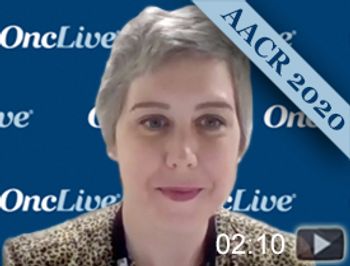
Sheila Figel, PhD, a neuro-oncologic scientist with Roswell Park Comprehensive Cancer Center, discusses preclinical research with canonical and noncanonical that are displayed on the surface of cancer cells.

The combination of nivolumab and ipilimumab provided similar clinical benefit to that of chemotherapy when given as a frontline treatment for patients with advanced non–small cell lung cancer who had stable and treated brain metastases at baseline.
Tiragolumab in combination with atezolizumab (Tecentriq) demonstrated early clinical activity and was found to be well tolerated in patients with advanced solid tumors, including those with metastatic non–small cell lung cancer who were PD-L1 positive and had not received prior checkpoint inhibition.

Leora Horn, MD, MSc, discusses data from an updated analysis of the phase 3 IMpower133 trial, which examined the first-line combination of atezolizumab (Tecentriq), carboplatin, and etoposide in small cell lung cancer.

The HER2-selective TKI tucatinib (Tukysa) demonstrated potent antitumor activity alone and in combination with ado-trastuzumab emtansine (T-DM1; Kadcyla) in HER2-overexpressing breast cancer cell lines and xenograft models.

The oral modified dysfunctional tyrosine SM-88 has demonstrated antitumor activity and appears to broadly effect the immune dynamics of the tumor microenvironment, according to early data from 2 xenograft studies.

Plasma-based next-generation sequencing continues to offer a minimally invasive, highly specific modality to identify patients with actionable alterations in non–small cell lung cancer.

Circulating tumor DNA clearance of EGFR mutation may be predictive of prolonged progression-free survival for patients with EGFR-mutant, MET-amplified non–small cell lung cancer with detectable ctDNA at baseline.