
Early findings from a phase III clinical trial suggest that patients with multiple myeloma who receive upfront autologous stem cell transplant survive longer without disease progression than those who receive chemotherapy alone.

Your AI-Trained Oncology Knowledge Connection!
Early findings from a phase III clinical trial suggest that patients with multiple myeloma who receive upfront autologous stem cell transplant survive longer without disease progression than those who receive chemotherapy alone.
Survival outcomes in patients with metastatic colorectal cancer were significantly longer among those with tumors originating on the left versus the right side of the colon, according to a retrospective analysis of the phase III 80405 trial.
Early palliative care integrated with oncology care benefits not only patients with cancer but also family caregivers.
Outcomes were significantly better in clinical trials that utilized a biomarker-based treatment selection strategy compared with non-personalized approaches.

Krishna Vanaja Donkena, PhD, Assistant Professor of Biochemistry and Molecular Biology, Center for Individualized Medicine, Mayo Clinic, discusses using immune and checkpoint markers to predict cancer-specific survival in bladder cancer.
Major health policy implications follow findings from the landmark Prostate, Lung, Colorectal, and Ovary screening trial, after it was found that 80% of the control group reported at least one PSA test during the trial.
Dennise Geiger, RN, Regional Cancer Care Associates, Central Jersey Division, discusses difficulties nurses face when using telephone triage, and the plan that was developed to better streamline the process.Â

Kathryn Ciccolini, RN, BSN, OCN, DNC, Memorial Sloan Kettering Cancer Center, discusses the concept she developed to manage dermatologic adverse events for patients with cancer.
When chemotherapy involves tricky infusion timing, patients are routinely admitted to hospitals to receive their treatments. But what would happen if these drugs could be administered successfully on an outpatient basis?

West Cancer Center researchers developed a best nursing practice protocol for titration of fentanyl sublingual spray, which is the most recently approved transmucosal immediate-release fentanyl formulation.
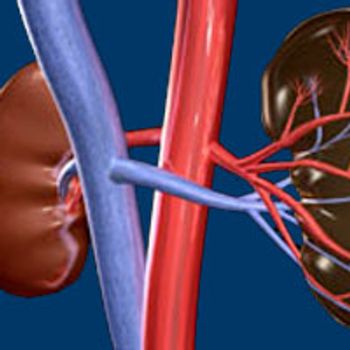
Researchers at the Rutgers Cancer Institute of New Jersey are testing the possibility of sending treatment drugs directly to the kidney in patients with upper urinary tract urothelial carcinoma.
When oncology nurses move proactively to learn more about and use proven effective green-lighted interventions like exercise and muscle relaxation in their daily practice, it can go a long way.

A multidisciplinary team led by oncology nurses can reduce both hospitalization and treatment breaks for patients with head and neck cancer.
Ellyn Matthews, PhD, RN, AOCNS, CBSM, who holds the Elizabeth Stanley Cooper Endowed Chair in Oncology Nursing at the University of Arkansas for Medical Sciences, addresses common misconceptions that patients with cancer have about sleep disturbances.

Jeannine Brant, PhD, Billings Clinic, discusses the benefits of patient-reported outcomes in cancer care.
Cancer doesn’t discriminate, but that doesn’t mean the healthcare system won’t. This proves to be even more true for the lesbian, gay, bisexual and transgender community.

Lots of people take their work home with them, but Lynne Malestic, RN, has given the idea new meaning.
Carmela Hoefling, RN, MSN, APN-C, AOCNP, advanced practice nurse, Gastrointestinal/Hepatobiliary Oncology Program, Rutgers Cancer Institute of New Jersey, discusses the effects that malnourishment can have on surgery.
Joel Stettler, BSN, RN, OCN, Moffitt Cancer Center, discusses procedures implemented at his institution for patients who are at risk for falls.Â

Developing a skin rash as a result of EGFR-inhibitor targeted therapy often signals that the drug is working, but for patients who experience these serious dermatologic adverse events, it may become so intolerable that they will scale back or even discontinue anticancer medications that could prolong their survival.
With the growing use of oral therapies in cancer care, it is crucial that oncology nurses are using a systematic approach to assess and improve adherence, according to Whitney Perry, APRN, AOCNP.
The possibility that hospitalized cancer patients will fall is an ongoing concern among the medical professionals who care for them.
Darcy Burbage, RN, MSN, AOCN, CBCN, Helen F. Graham Cancer Center & Research Institute, discusses the role nurses play in treating patients with chemotherapy-induced peripheral neuropathy (CIPN).
David Eagle, MD, past president of the Community Oncology Alliance (COA) and partner in Lake Norman Oncology, Mooresville, North Carolina, discuss controlling costs of cancer treatment.

Jeff Geschwind, MD, professor and chairman, Radiology and Biomedical Imaging, Yale Cancer Center, discusses locoregional treatment options for patients with hepatocellular carcinoma (HCC).
A number of novel therapies are currently being explored as second-line treatments for patients with advanced hepatocellular carcinoma, including a host of targeted therapies and various immune checkpoint inhibitors.
Immunotherapy approaches are showing early signs of activity against a range of gastrointestinal cancers, defying the skeptical view that these tumors would not respond to the emerging agents succeeding in other malignancies.

Douglas B. Evans, MD, FACS, Chair, Professor, Donald C. Ausman Family Foundation Professor of Surgery, Medical College of Wisconsin, discusses how to appropriately sequence therapies for pancreatic cancer.
Michael Choti, MD, explains the impact of advancements in the treatment of patients with liver cancer and how building on them will require all oncology professionals to work as a team.
Cancer care is shifting from a consumption to a value-based model, and precision oncology should play a vital role in that process by helping to deliver more effective therapies with more manageable pricing profiles.