

Andrew D. Seidman, MD, medical oncologist, Memorial Sloan Kettering Cancer Center, discusses the label indication for ixabepilone (Ixempra) for the treatment of patients with aggressive breast cancer.

Your AI-Trained Oncology Knowledge Connection!
Andrew D. Seidman, MD, medical oncologist, Memorial Sloan Kettering Cancer Center, discusses the label indication for ixabepilone (Ixempra) for the treatment of patients with aggressive breast cancer.
Frontline treatment with ibrutinib reduced the risk of progression or death by 84% compared with single-agent chlorambucil for elderly patients with chronic lymphocytic leukemia and small lymphocytic lymphoma.

Shaji Kumar, MD, discusses how the phase III SWOG S0777 study, which investigated the combination of bortezomib (Velcade), lenalidomide (Revlimid), and dexamethasone, significantly changed the frontline treatment paradigm for patients with multiple myeloma
Elizabeth A. Mittendorf, MD, PhD, discusses nelipepimut-S (NeuVax), a peptide derived from HER2 protein combined with granulocyte-macrophage colonystimulating factor that is currently being investigated as a single-agent, in combination with standard-of-care therapies, and in multiple settings and subtypes of breast cancer.

Gunter von Minckwitz, MD, director of the German Breast Group Research Institute, discusses lessons learned from clinical trials examining neoadjuvant therapies in patients with breast cancer.

Debu Tripathy, MD, chair, Breast Medical Oncology, The University of Texas MD Anderson Cancer Center, discusses the use of ixabepilone as a treatment for patients with triple-negative breast cancer (TNBC).
There is a subset of low-risk patients with ductal carcinoma in situ for whom surgery alone is optimal and the Oncotype DX DCIS Score is a useful assay for identifying these individuals.

A number of crucial findings were presented over the course of 2015 that helped to characterize an ever-growing trend toward personalized medicine in the treatment of breast cancer.

Pathologic complete response may still have a role in accelerated neoadjuvant approvals for select patients with early stage breast cancer, despite the fact that it remains an unproven surrogate endpoint.
Sunil Verma, MD, department head, Clinical Department of Oncology, Calgary Zone, medical director, Tom Baker Cancer Centre, discusses recent advancements in the field of HER2-positive breast cancer.

Amy Robach, breast cancer survivor and Good Morning America news anchor, describes her diagnosis of a 2 cm tumor in her right breast that appeared isolated on ultrasound and other subsequent scans.

Breast cancer survivor and Good Morning America news anchor Amy Robach delivered a compelling keynote address at the 33rd Annual Miami Breast Cancer Conference®.

The combination of the alpha-specific PI3K inhibitor alpelisib (BYL719) and fulvestrant (Faslodex) demonstrated promising early efficacy and mild toxicity in heavily pretreated postmenopausal women with ER-positive metastatic breast cancer.

Among patients with HR+/HER2- or triple-negative metastatic breast cancer, nab-paclitaxel (Abraxane) improved time to treatment discontinuation, time to next treatment, and had a favorable safety profile compared with paclitaxel.
Elizabeth A. Mittendorf, MD, PhD, associate professor, Department of Surgical Oncology, The University of Texas MD Anderson Cancer Center, discusses a clinical trial examining nelipepimut-S plus GM-CSF vaccine therapy as a treatment for patients with breast cancer.
The rapid advance of oncology drug development requires evolving beyond using overall survival in randomized trials as the only acceptable endpoint.
There is no clearly acceptable answer to the question of what is the appropriate margin for ductal carcinoma in situ.
Carboplatin shows promise in treating metastatic BRCA-mutated triple negative breast cancer.

William F. Symmans, MB, ChB, Division of Pathology/Lab Medicine, Department of Pathology, The University of Texas MD Anderson Cancer Center, discusses the institution's Moon Shots program for patients with triple-negative breast cancer.
Kimberly L. Blackwell, MD, medical oncologist, Duke Cancer Institute, discusses using the word "cure" in patients with breast cancer who have not had recurrences of disease.

Jonathan D. Schoenfeld, MD, MPH, physician, assistant professor of Radiation Oncology, Harvard Medical School, Dana Farber Cancer Center on the immunologic effects of chemotherapy and radiation in head and neck cancer.
Ezra Cohen, MD, Associate Director, Professor of Medicine Moores Cancer Center, UC San Diego, discusses if lenvatinib should be used in the frontline or second-line setting in differentiated thyroid cancer.
David Adelstein, MD, Department of Hematology and Oncology, Cleveland Clinic, discusses adjuvant therapy options for patients with oral cancer.
The 2016 Community Oncology Conference, Innovation in Cancer Care: Moving From Theory to Practice, from April 13-15, will feature an expanded lineup of clinical presentations.

Randal S. Weber, MD, FACS, professor, department chair, John Brooks Williams and Elizabeth Williams Distinguished University Chair in Cancer Medicine, Department of Head and Neck Surgery, Division of Surgery, The University of Texas MD Anderson Cancer Center, discusses future treatment approaches for patients with melanoma.
Jessica Frakes, MD, assistant professor of Radiation Oncology, Department of Radiation Oncology, Moffitt Cancer Center, discusses management of toxicities associated with treatment of patients with HPV-positive oropharyngeal squamous cell carcinoma.
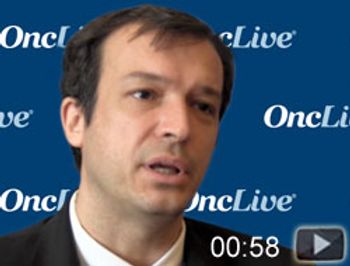
Renato G. Martins, MD, medical director of Outpatient General Oncology/Hematology at Seattle Cancer Care Alliance, medical director of Thoracic/Head and Neck Oncology, and professor at the University of Washington School of Medicine, discusses side effects that are associated with lenvatinib (Lenvima).
An early-stage trial is examining the addition of nivolumab to a cetuximab regimen in head and neck squamous cell carcinoma.
The combination of pazopanib (Votrient) and cetuximab (Erbitux) showed a disease control rate of 77% in patients with recurrent or metastatic head and neck squamous cell carcinoma, including patients with cetuximab- or platinum-resistant disease.
Among patients with HPV-negative, locoregionally advanced head and neck squamous cell carcinoma with a poor prognosis, adding cetuximab (Erbitux) to induction chemotherapy and hyperfractionated or accelerated chemoradiation therapy produced long-term control.