
The 2016 NCCN Annual Conference included a push to find more effective ways to encourage and deliver palliative care services across a variety of settings in oncology.

Your AI-Trained Oncology Knowledge Connection!
The 2016 NCCN Annual Conference included a push to find more effective ways to encourage and deliver palliative care services across a variety of settings in oncology.
Alan P. Venook, MD, shares insight into the evolving treatment paradigm for colorectal cancer.
Weekly paclitaxel for recurrent ovarian cancer prevailed over the VEGF inhibitor cabozantinib in a randomized comparison of the two drugs.
Three different chemotherapy regimens, each combined with bevacizumab, failed to demonstrate an advantage for patients with advanced ovarian cancer or build on results of a landmark trial reported more than a decade ago.
Ursula A. Matulonis, MD, discusses ongoing developments with olaparib, as well as the overall future of PARP inhibitors in ovarian cancer.
Jean Hurteau, MD, professor, Division of Gynecologic Oncology at NorthShore University Health System, discusses the difficulties of diagnosing ovarian clear cell carcinoma. Hurteau says data for the diagnosis of the carcinoma is older, and is not relevant to contemporary diagnoses due to the fact that there were more mixed tumors previously than there are now.
Bobbie J. Rimel, MD, assistant professor, Obstetrics and Gynecology, discusses discovering BRCA mutations early in ovarian cancer patients. Rimel says with the genetic information of knowing which patients harbor which genetic mutations, oncologists can offer their patients treatments such as PARP inhibitors, which are gene-specific.
John Byrd, MD, director of the Division of Hematology, Ohio State University Comprehensive Cancer Center, Arthur G. James Cancer Hospital and Richard J. Solove Research Institute, discusses the RESONATE 2 study, which looked at ibrutinib versus chlorambucil in patients with treatment-naïve chronic lymphocytic leukemia (CLL).
Sundar Jagannath, MD, professor of Medicine, Hematology and Medical Oncology, Mount Sinai Hospital, discusses upcoming agents in multiple myeloma.
An ongoing clinical trial has begun the process of evaluating whether the addition of a booster agent can take the anticancer activity of PD-1 directed immunotherapy to another level.
Shannon Westin, MD, discusses refining the use of PARP inhibitors in ovarian cancer by gaining a greater understanding of mechanisms of resistance and exploring combination and sequencing possibilities.
An investigational extended-release formulation of the antiemetic granisetron achieved a complete response more often than did ondansetron in cancer patients receiving highly emetogenic cisplatin-based chemotherapy.
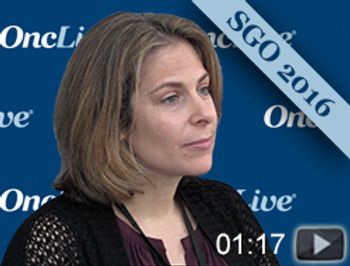
Terri Febbraro, MD, third year fellow, University of Chicago/NorthShore University Health System, discusses length of time receiving chemotherapy versus overall survival in patients with ovarian cancer. Febbraro says the study looked at three separate groups of patients with ovarian cancer based on the length of time they receieved chemotherapy, with the group being on chemotherapy the longest having the worst overall survival rates.
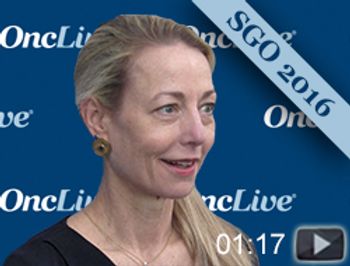
Martee Hensley, MD, a medical oncologist at Memorial Sloan Kettering Cancer Center, discusses the introduction of trabectedin into the armamentarium for uterine leiomyosarcoma. Hensley says the FDA approval for the treatment requires patients to have had a prior anthracycline therapy, and the treatment will likely fall into the third- or fourth-line of treatment for the malignancy. She adds that trabectedin may fall into the fourth-line due to treatments such as pazopanib currently occupying the third-line.
Treatment with trabectedin significantly improved progression-free survival compared with dacarbazine in women with advanced uterine leiomyosarcoma, according to a subgroup analysis of the phase III SAR-3007 trial.
Targeted agents, particularly ibrutinib and idelalisib, are becoming increasingly important in the treatment of chronic lymphocytic leukemia, and have replaced chemotherapy in many settings.
Chimeric antigen receptor-modified T-cell therapies have demonstrated durable complete responses for patients with relapsed/refractory B-cell acute lymphoblastic leukemia; however, several questions remain regarding their optimal use and applicability outside of this disease.
Emily Ko, MD, assistant professor of Obstetrics and Gynecology, University of Pennsylvania Health System, discusses the role of surgery in endometrial cancer and the candidacy of patients for the procedure.
Susan O’Brien, MD, Associate Director for Clinical Science for the Chao Family Comprehensive Cancer Center and Medical Director of the Sue and Ralph Stern Center for Cancer Clinical Trials and Research, UC Irvine Health, discusses upcoming agents in chronic lymphocytic leukemia (CLL).

Combining 3 markers of homologous recombination deficiency significantly improved prediction of outcome of platinum-based treatment of ovarian cancer compared with the individual markers, a retrospective analysis of tissue samples showed.
John Leonard, MD, medical oncology, at Weill Cornell Medicine and NewYorkPresbyterian Hospital, discusses follicular lymphoma treatment considerations. Treatment options include rituximab and bendamustine, which have been around for sometime, as well as newer agents like obinutuzumab, says Leonard.
Terri Woodard, MD, assistant professor, Department of Gynecologic Oncology and Reproductive Medicine, The University of Texas MD Anderson Cancer Center, discusses if conservative management for women with ovarian cancer is warranted.
Extended follow-up data continue to demonstrate the efficacy and tolerability of ibrutinib in previously treated patients with chronic lymphocytic leukemia, including those with high-risk gene mutations and prognostic features.
Immuno-oncology has advanced rapidly, with the introduction of immune checkpoint inhibition and effective adoptive T-cell therapies. As these agents rush through development, several questions remain regarding the optimal patients for treatment and the next steps for further improving outcomes.
With the R-CHOP chemotherapy regimen considered the backbone of therapy for treatment-naïve patients with non-Hodgkin lymphoma, researchers are now delving further into the genome to pave the way for therapeutic improvements.
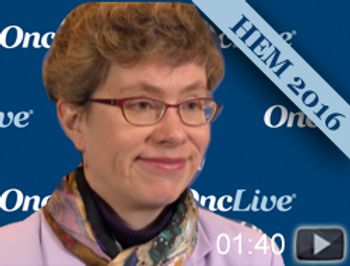
Jennifer Brown MD, PhD, Director, Chronic Lymphocytic Leukemia Center, Senior Physician, Associate Professor of Medicine, Harvard Medical School, Dana Farber Cancer Institute, discusses RESONATE 2 and frontline ibrutinib use in patients with chronic lymphocytic leukemia (CLL).
Patients with advanced ovarian cancer harboring mutations in homologous recombination (HR) genes, including BRCA1/2, had improved survival outcomes versus patients without HR mutations.
Michael E. Williams, MD, ScM, Byrd S. Leavell Professor of Medicine and Professor of Pathology, University of Virginia Health System, discusses frontline lenalidomide (Revlimid) and rituximab (Rituxan) in mantle cell lymphoma (MCL).
A multitude of PI3K and BTK inhibitors are currently in development that offer distinct advantages over existing treatments for patients with relapsed chronic lymphocytic leukemia.
Sagar Lonial, MD, professor and chair, department of Hematology & Medical Oncology, Emory University School of Medicine, Chief Medical Officer, Winship Cancer Institute of Emory University, discusses treatment for smoldering multiple myeloma.