
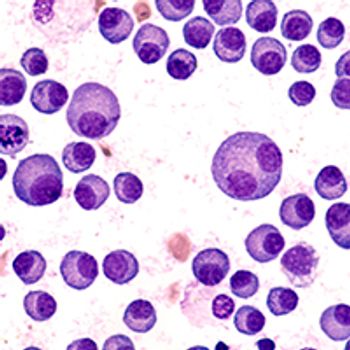
Ciltacabtagene autoleucel demonstrated a significant improvement in progression-free survival in patients with relapsed/lenalidomide-refractory multiple myeloma who received 1 to 3 prior lines of therapy.

Your AI-Trained Oncology Knowledge Connection!
Ciltacabtagene autoleucel demonstrated a significant improvement in progression-free survival in patients with relapsed/lenalidomide-refractory multiple myeloma who received 1 to 3 prior lines of therapy.

Despite American Society of Clinical Oncology guidelines calling for introduction of palliative care early in the course of disease, these services remain underused.

The European Medicines Agency’s Committee for Medicinal Products for Human Use has recommended the approval of luspatercept for the treatment of patients with anemia associated with non–transfusion dependent beta thalassemia.

The FDA has approved pembrolizumab (Keytruda) as an adjuvant treatment following resection and platinum-based chemotherapy for patients with stage IB (T2a ≥4 cm), II, or IIIA non–small cell lung cancer.

The FDA has granted a fast track designation to tamibarotene for the treatment of higher-risk myelodysplastic syndrome.

Zolbetuximab demonstrated a survival benefit and a tolerable safety profile when combined with mFOLFOX6 vs mFOLFOX6 plus placebo in patients with CLDN18.2-positive, HER2-negative locally advanced unresectable or metastatic gastric or gastroesophageal junction adenocarcinoma, according to primary results from the phase 3 SPOTLIGHT trial.

UW Carbone’s expertise in head and neck cancer treatment and research are held in high esteem nationally, as evidenced by the National Cancer Institute awarding UW a Specialized Program of Research Excellence grant in 2016.

Magenta Therapeutics has voluntarily paused enrollment for a phase 1/2 trial evaluating the antibody-drug conjugate MGTA-117 in patients with relapsed/refractory acute myeloid leukemia or myelodysplastic syndrome following the death of a patient.

Fam-trastuzumab deruxtecan-nxki has received approval in the European Union as a single agent for the treatment of patients with unresectable or metastatic HER2-low breast cancer who have received prior chemotherapy for metastatic disease or developed disease recurrence during or within six months of completing adjuvant chemotherapy.

The CAR T-cell therapy lisocabtagene maraleucel induced complete responses in patients with relapsed/refractory chronic lymphocytic leukemia or small lymphocytic leukemia.
The risk for developing hepatocellular carcinoma appears to increase with subsequent generations for Americans of Mexican descent, according to findings from a study of US-born Hispanics/Latinos living in Los Angeles, California.

Joyce O’Shaughnessy, MD, highlights key data from the 2022 San Antonio Breast Cancer Symposium, explains how trastuzumab deruxtecan and CDK4/6 inhibitors are altering the treatment landscape, and discusses novel data on steroid receptor expression in triple-negative breast cancer.

Fennec Pharmaceuticals announced an update to the National Comprehensive Cancer Network’s practice guidelines for Adolescent and Young Adult Oncology, calling for the use of sodium thiosulfate injection to reduce the risk for ototoxicity in pediatric patients receiving cisplatin.

Maintenance therapy with carfilzomib, lenalidomide, and dexamethasone led to a significant improvement in progression-free survival vs lenalidomide alone in patients with newly diagnosed multiple myeloma who underwent autologous stem cell transplant after induction therapy, according to an unplanned interim analysis of the phase 3 ATLAS trial.

The combination of avutometinib and defactinib elicited responses in patients with recurrent low-grade serous ovarian cancer, according to data from a planned interim analysis of the registration-directed phase 2 RAMP-201 trial.

The American Oncology Network, LLC announced Brad Prechtl’s retirement as President and Chief Development Officer effective January 1, 2023.
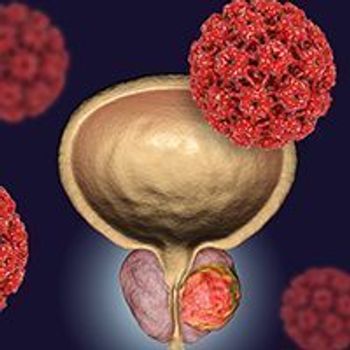
Merck is discontinuing the phase 3 KEYNOTE-991 trial evaluating pembrolizumab plus enzalutamide and androgen deprivation therapy vs placebo plus enzalutamide/ADT in patients with metastatic hormone-sensitive prostate cancer due to futility.

Adding the PD-1 inhibitor pembrolizumab to gemcitabine and cisplatin led to a significant improvement in overall survival compared with gemcitabine and cisplatin alone as first-line therapy in patients with advanced or unresectable biliary tract cancer.

Although fully addressing the financial hardship of patients with cancer requires a complex, multifaceted approach, even small changes may ease these burdens and improve patient outcomes.

Bavituximab in combination with pembrolizumab produced responses in patients with previously untreated advanced hepatocellular carcinoma.

Second-line ripretinib produced a clinical benefit in patients with advanced gastrointestinal stromal tumor harboring KIT exon 11 and 17/18 mutations who progressed on or were intolerant to imatinib.

The addition of the novel bispecific antibody CTX-009 to paclitaxel showed promising efficacy in the second- and third-line settings for patients with advanced biliary tract cancer.

Autologous stem cell transplant had no effect on real-world time to next treatment and overall survival compared with maintenance rituximab following induction with bendamustine and rituximab or R-CHOP, for patients with mantle cell lymphoma according to findings from a retrospective study.

Alicia Morgans, MD, MPH, discussed the evolving role of androgen deprivation therapy in metastatic hormone-sensitive prostate cancer, investigational immunotherapy combinations in urothelial cancer, and how antibody-drug conjugates provide a unique means of delivering toxic agents directly to tumors.

A CAR-T-cell therapy known as axicabtagene ciloleucel is safe and shows encouraging signs of efficacy in a small pilot trial involving patients with lymphoma of the brain and/or spinal cord.

Geneoscopy has submitted a premarket approval application to the FDA for a noninvasive, stool-based, at-home screening test to detect colorectal cancer and advanced adenomas in average-risk individuals.

David Siegel, MD, PhD, discusses the evaluation of idecabtagene vicleucel in cohort 2C of the KarMMa-2 trial and what these data could mean for this population and others with multiple myeloma.
The FDA has granted a priority review to the supplemental new drug application (sNDA) to avapritinib for the treatment of adult patients with indolent systemic mastocytosis.

First-line ruxolitinib plus pegylated interferon alpha 2a demonstrated durable spleen volume reduction in patients with myelofibrosis.

Andrew McKenzie, PhD, discusses biomarkers to test for in breast and lung cancers, the value of multicancer early detection, and how biomarker testing can better direct targeted treatment across solid tumors.