
The overall response rate achieved with ruxolitinib at day 28 proved to be higher than what was achieved with best available therapy in patients with steroid-refractory acute graft-vs-host disease, irrespective of organ involvement.

Your AI-Trained Oncology Knowledge Connection!
The overall response rate achieved with ruxolitinib at day 28 proved to be higher than what was achieved with best available therapy in patients with steroid-refractory acute graft-vs-host disease, irrespective of organ involvement.
Fewer African American and Hispanic patients participated in oncology trials from 2003 to 2016 than from 1996 to 2002.
Widespread germline testing in the United States could prevent cancer in hundreds of thousands of people. However, despite known benefits, uptake for genetic testing has been slow: only 1 in 5 individuals use recommended genetic services even when there is a significant family history of colorectal, breast, or ovarian cancer.

Rahul Banerjee, MD, discusses how to navigate the obstacles in interpreting Kaplan-Meier curves.
The pending biologics license application and supplemental new drug application seeking the approval of the combination of ublituximab and umbralisib in adult patients with chronic lymphocytic leukemia (CLL) and small lymphocytic lymphoma has been voluntarily withdrawn by TG Therapeutics, Inc.
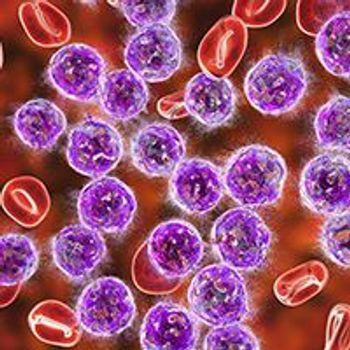
Treatment with a treosulfan-based conditioning regimen led to a superior event-free and overall survival compared with busulfan-based conditioning in patients with acute myeloid leukemia undergoing allogeneic hematopoietic cell transplantation, according to a post-hoc subgroup analysis of the phase 3 MC-FludT.14/L trial.

Nektar Therapeutics and Bristol Myers Squibb have announced the decision to end the global clinical development program for the combination of bempegaldesleukin and nivolumab based on findings from preplanned analyses of 2 late-stage clinical trials.
Physical function-related symptoms were prominent in the symptom burden of adult patients with myelofibrosis and moderate or severe thrombocytopenia, according to a retrospective analysis of the phase 3 PERSIST-2 study.

Dana-Farber Cancer Institute is launching a year-long celebration of its 75th anniversary to highlight its history and progress in cancer care and transformative cancer research.
Elias J. Jabbour, MD, and Matthew S. Davids, MD, MMSc, review data on asciminib and ponatinib in the post–second generation TKI setting for chronic myeloid leukemia that were presented at the 2021 ASH Meeting and Exposition.
For patients with osteosarcoma or Ewing sarcoma who develop pathologic fractures, the prognosis remains poor; however, there is still the possibility for limb salvage therapy.

New treatment methods in patients with small cell lung cancer and non–small cell lung cancer are on the horizon, with the introduction of combination immunotherapy, biomarker assays, and supportive oncology programs for patients and care partners.
A small proportion of a subset of patients with chronic lymphocytic leukemia acquired mechanisms of genetic resistance to the novel noncovalent BTK inhibitor pirtobrutinib, according to results from a genomic analysis of patients in the phase 1/2 BRUIN trial.
Investigators have explored the potential of KRAS inhibition in patients with colorectal cancer, and early results have established the pathway as a prime target for drug development.
Epcoritamab was found to produce an encouraging overall response rate in patients with relapsed or refractory large B-cell lymphoma who previously received CAR T-cell therapy.

American Oncology Network, LLC and its partner, Low Country Cancer Care, are pleased to announce the opening of their sixth cancer center located at 1206 Alice Street in Waycross, Ga. Medical oncologist and hematologist Dr. Asit Jha will be joining LCCC and practicing at this new site.

Tapan M. Kadia, MD, discusses what makes uproleselan unique from other agents under investigation in acute myeloid leukemia and sheds light on the many research efforts dedicated to further exploring its use in this disease.

The European Commission has approved enfortumab vedotin for use as a single agent in adult patients with locally advanced or metastatic urothelial cancer who have received prior platinum-containing therapy and a PD-1/L1 inhibitor.

The addition of durvalumab and tremelimumab to chemotherapy led to encouraging responses and a suitable safety profile as neoadjuvant therapy in patients with advanced ovarian cancer, according to findings from the phase 2 KGOG 3046.
The addition of SOT101, an interleukin-2/IL-15 Rβγ superagonist, to Pembrolizumab generated a clinical benefit and encouraging safety data in patients with advanced solid tumors.
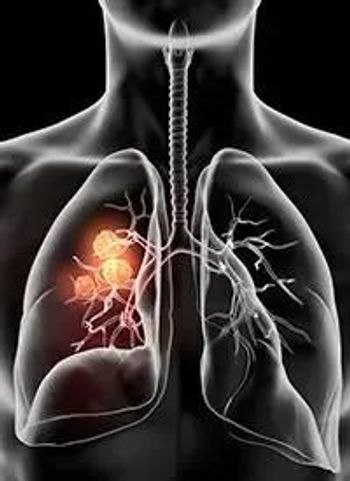
The addition of adebrelimab to chemotherapy elicited improved overall survival compared with chemotherapy and placebo in patients with extensive-stage small cell lung cancer.
The addition of the selective oncolytic adenovirus CG0070 to pembrolizumab showed encouraging activity and safety in Bacillus Calmette-Guerin–unresponsive non-muscle invasive bladder cancer, according to early data from the phase 2 CORE1 trial.

The addition of canakinumab to frontline pembrolizumab and chemotherapy did not improve survival in previously untreated patients with locally advanced or metastatic non–small cell lung cancer. However, signals of activity were seen in patients with a baseline inflammatory biomarker high sensitivity-C-reactive protein.

The FDA has cleared an investigational new drug application for 177Lu-rhPSMA-10.1 as a potential therapeutic option for patients with metastatic castration-resistant prostate cancer.
The combination of the CD40 agonist antibody sotigalimab and pembrolizumab demonstrated a favorable safety profile and led to immunologic changes that correlated with clinical response in patients with unresectable stage III or IV metastatic melanoma.
The addition of the investigational anti-CD39 antibody TTX-030 to frontline treatment with the PD-L1 inhibitor budigalimab and mFOLFOX6 was determined to be safe and tolerable in patients with locally advanced or metastatic HER2-negative gastroesophageal junction adenocarcinoma.
The combination of nivolumab and ipilimumab demonstrated a statistically significant improvement in progression-free survival vs ipilimumab alone as second-line therapy in previously treated patients with stage III unresectable or stage IV melanoma.
The addition of BO-112 to pembrolizumab demonstrated efficacy and safety in patients with advanced melanoma who were resistant to anti–PD-1 therapies, according to final results from the phase 2 SPOTLIGHT203 trial.

Navitoclax plus ruxolitinib produced an improvement in bone marrow fibrosis and a reduction in variant allele frequency in patients with myelofibrosis who progressed on or had suboptimal response with prior ruxolitinib monotherapy.

MEDI5752 treatment led to a dose-dependent increase in peripheral T-cell proliferation and encouraging antitumor activity in patients with advanced solid tumors.