

Michael Simon, MD, MPH, discusses advances in genetic testing for breast cancer, highlighting the overlap between genomic risk assessment and tumor genomic profiling.

Your AI-Trained Oncology Knowledge Connection!
Michael Simon, MD, MPH, discusses advances in genetic testing for breast cancer, highlighting the overlap between genomic risk assessment and tumor genomic profiling.

The FDA has incorporated PD-L1 status into the labels for pembrolizumab (Keytruda) and atezolizumab (Tecentriq) for existing frontline approvals for platinum-ineligible patients with urothelial carcinoma.

Neeraj Agarwal, MD, discusses his preferred sequencing strategies for treating patients with kidney cancer, and ongoing immunotherapy research in the field.

Arun S. Singh, MD, discusses current and emerging treatment strategies for patients with uterine leiomyosarcoma and other sarcomas.

The European Commission has granted blinatumomab full marketing authorization for the treatment of adult patients with Philadelphia chromosome-negative relapsed/refractory B-cell precursor acute lymphoblastic leukemia, according to Amgen, the developer of the anti-CD19 immunotherapy.
The combination of neratinib and T-DM1 induced an overall response rate of 60% in previously-treated women with HER2-positive metastatic breast cancer.

Nisha Bansal, MD, discusses the evolving therapeutic paradigm of frontline approaches for patients with ovarian cancer

Rashmi K. Murthy, MD, discusses the clinical benefit of tucatinib after isolated brain progression in patients with HER2-positive breast cancer.

Ian Flinn, MD, PhD, discusses the activity and tolerability of 5F9 with rituximab in relapsed/refractory non-Hodgkin lymphoma, as well as intriguing findings with ibrutinib/venetoclax in frontline chronic lymphocytic leukemia.

Justin N. Baker, MD, discusses the benefits of a holistic approach to end-of-life care in pediatric oncology, as well as the importance of teaching palliative care to the next generation of oncologists and hematologists.

Komal L. Jhaveri, MD, discusses the current and potential future uses of CDK4/6 inhibitors in breast cancer.

The CD19-directed chimeric antigen receptor T-cell therapy lisocabtagene maraleucel (JCAR017; liso-cel) is showing promising response rates in patients with high-risk diffuse large B-cell lymphoma.
The FDA has granted an accelerated approval to pembrolizumab for the treatment of adult and pediatric patients with refractory primary mediastinal large B-cell lymphoma, or those who have relapsed after 2 or more prior lines of therapy.

Long-term findings from a phase I study of trastuzumab deruxtecan showed that the investigational HER2-targeting antibody-drug conjugate had antitumor activity in multiple tumor types that expressed HER2 at varying levels.
The FDA has approved bevacizumab for use in combination with carboplatin and paclitaxel, followed by bevacizumab monotherapy, for the treatment of women with advanced ovarian cancer following initial surgical resection.
The FDA has expanded the indication for the Orbis Paxman Hair Loss Cooling System to prevent chemotherapy-related alopecia in patients with solid tumors.
Tucatinib used in combination with capecitabine, trastuzumab, or both agents showed promising antitumor activity in heavily pretreated women with HER2-positive breast cancer with or without brain metastases.
The FDA has granted pembrolizumab an accelerated approval for the treatment of patients with advanced, PD-L1–positive cervical cancer with disease progression on or after chemotherapy.
The FDA approved a supplemental new drug application adding overall survival data from the phase III ASPIRE trial to the label for carfilzomib for use in patients with relapsed or refractory multiple myeloma.
Tanios Bekaii-Saab, MD, discusses neoadjuvant and adjuvant strategies in treating patients with early-stage pancreatic cancer.

The European Commission has approved osimertinib (Tagrisso) as a frontline treatment for patients with EGFR-mutant locally-advanced or metastatic non–small cell lung cancer.
Lisa A. Newman, MD, discusses de-escalation strategies emerging in breast cancer surgery.
The FDA has granted a regular approval to venetoclax for the treatment of patients with chronic lymphocytic leukemia or small lymphocytic lymphoma, with or without 17p deletion, following at least 1 prior therapy. The BCL-2 inhibitor is now also approved for use in combination with rituximab in the same patient population.

Haythem Y. Ali, MD, discusses the state of biosimilar development and implementation in the field of oncology.

Eleanor M. Walker, MD, discusses advances in radiation therapy in breast cancer and the rationale for hypofractionated scheduling.

Gregory L. Beatty, MD, PhD, shares his insight on the challenges with sequencing immunotherapies in light of recent advancements in gastrointestinal malignancies.

Theodore H. Welling, MD, discusses the expanding role of surgery in hepatobiliary neoplasms.

Anne Chiang, MD, PhD, discusses recent developments with immunotherapy and the overall outlook for the treatment landscape of small cell lung cancer.

The CD19-targeted CAR T-cell product axicabtagene ciloleucel (axi-cel; Yescarta) is currently being investigated in patients with relapsed/refractory MCL in the ongoing ZUMA-2 trial.
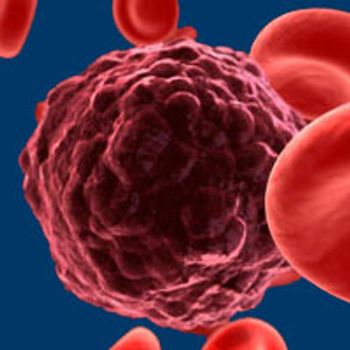
Combining the BTK inhibitor ibrutinib (Imbruvica) with the PI3K inhibitor buparlisib induced an objective response in 18 of 37 patients with relapsed/refractory non-Hodgkin lymphoma.