

Frontline treatment with the combination of ibrutinib (Imbruvica) and obinutuzumab (Gazyva) improved progression-free survival compared with chlorambucil plus obinutuzumab in patients with CLL or SLL.

Your AI-Trained Oncology Knowledge Connection!
Frontline treatment with the combination of ibrutinib (Imbruvica) and obinutuzumab (Gazyva) improved progression-free survival compared with chlorambucil plus obinutuzumab in patients with CLL or SLL.

Jing Ai, MD, discusses the treatment of patients with myelodysplastic syndrome.

The FDA has approved a new formulation of abiraterone acetate in combination with methylprednisolone as a treatment for men with metastatic castration-resistant prostate cancer.
A number of biological factors, including age at diagnosis, symptom duration at diagnosis, and HIST1H3B mutation status, are associated with survival ≥2 years in children and young adults with diffuse intrinsic pontine glioma, a brainstem malignancy with a median survival

Suresh S. Ramalingam, MD, sheds light on the recent data with emerging agents in small cell lung cancer.
Diane M. Simeone, MD, discusses the molecular complexities of pancreatic cancer, some of the commonly identified mutations, and ongoing clinical trial efforts that may be game changing for the field.
An underlying autoimmune condition may have played a role in making a 13-year-old patient refractory to treatment for immune thrombocytopenia.

Ponatinib (Iclusig) induced a complete remission in one pediatric/adolescent patient with Philadelphia chromosome-positive acute lymphoblastic leukemia, and demonstrated promising clinical activity in another.

Nilanjan Ghosh, MD, PhD, discusses the advances and ongoing research in frontline treatment of patients with Hodgkin lymphoma.
Elisavet Paplomata, MD, discusses ABP 980 and the impact that biosimilars may have on global access to cancer care.
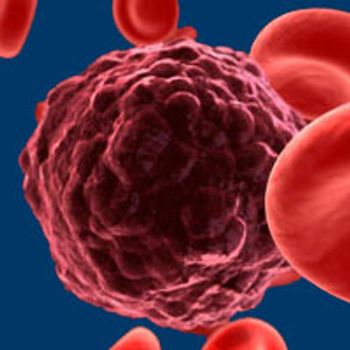
Tocilizumab resolved cytokine release syndrome in patients with relapsed/refractory pediatric B-cell acute lymphoblastic leukemia without reducing the efficacy of tisagenlecleucel.

Apalutamide (Erleada) lowered the risk of PSA progression by 94% in patients with nonmetastatic castration-resistant prostate cancer, according to a posthoc analysis from the phase III SPARTAN trial.

Eric A. Collisson, MD, speaks to the challenges and emerging advancements in cholangiocarcinoma and colon cancer.

Anna Farago, MD, PhD, discusses the biology of larotrectinib, as well as the importance of genetic testing for molecular alterations like TRK in patients with locally advanced solid tumors.
The FDA has issued a drug safety notification warning against the use of frontline single-agent immune checkpoint inhibition for patients with PD-L1–low expressing platinum-eligible urothelial carcinoma.
Dennis J. Slamon, MD, PhD, and Sara A. Hurvitz, MD, discuss the impact of CDK4/6 inhibitors in ER-positive breast cancer.
Paul E. Oberstein, MD, discusses incorporating novel agents and sequencing approaches in advanced pancreatic neoplasms.
Anas Younes, MD, discusses the current and future state of CAR T-cell therapies and immune checkpoint inhibitors in the landscape of hematologic malignancies.
Selina Chen-Kiang, PhD, details the research being conducted with CDK4/6 inhibitors in mantle cell lymphoma.

The European Commission has approved cabozantinib (Cabometyx) for previously untreated patients with intermediate- or poor-risk advanced renal cell carcinoma.
Ryan W. Jacobs, MD, discusses the use of small molecule inhibitors in the treatment of patients with chronic lymphocytic leukemia.

Jeffrey Wolf, MD, emphasizes the importance of identifying risk when diagnosing patients with multiple myeloma.

CMS's initial payment codes for CAR T-cell therapies are opposed by the medical community on the basis that they would be cumbersome to implement and wouldn't reflect the full amount of care delivered to each patient.
The FDA has approved epoetin alfa-epbx (Retacrit) as a biosimilar to epoetin alfa (Epogen/Procrit) for the treatment of anemia caused by chronic kidney disease, chemotherapy, or use of zidovudine in patients with HIV infection.
Shana Wingo, MD, discusses the surgical landscape in patients with newly diagnosed ovarian cancer.
Lauren C. Harshman, MD, discusses ongoing clinical trials examining the incorporation of immune therapies into practice.
Dennis R. Scribner Jr, MD, discusses the elements and evolution of treatment for patients with recurrent ovarian cancer.
President Donald Trump announced a sweeping “blueprint” to lower prescription drug costs, promising to expand access to generic drugs and biosimilars and remove incentives that keep drug prices high.
Mike Janicek, MD, discusses the importance of genetic testing and how the ovarian field can benefit from a better understanding of it through genetic counselors and self-education.
James B. Yu, MD, discusses techniques with radiation therapy, potential roadblocks, and the importance of genomic testing in treating patients with prostate cancer.