



Gastrointestinal Cancer
Latest News

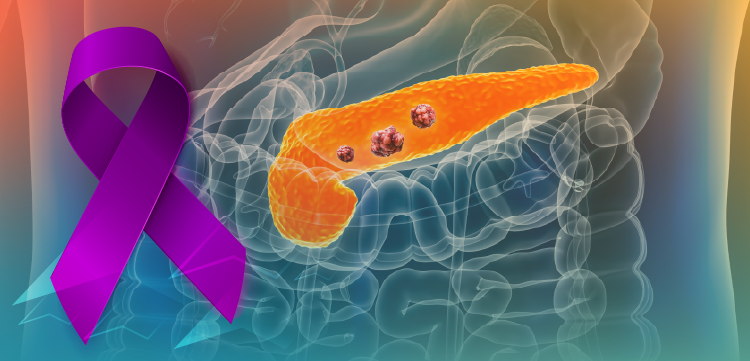
FDA Grants Fast Track Designation to PBP1510 in Metastatic Pancreatic Adenocarcinoma
By Chris Ryan
Advertisement
Latest Videos

CME Content




























Advertisement
More News
In the context of frontline treatment strategies in advanced HCC, expert oncologists review clinical research in systemic immunotherapy approaches.
Expert panelists highlight anti-angiogenic systemic therapies under investigation for advanced HCC in second line and beyond.

Joshua Hill, MD, MS, discussed the early efficacy of dostarlimab in mismatch repair–deficient locally advanced rectal cancer.
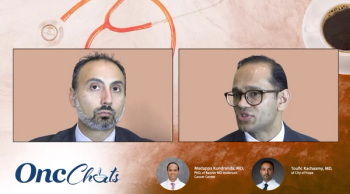
In this fourth episode of OncChats: Understanding Endoscopy in the Realm of GI Cancers, Madappa Kundranda, MD, PhD, and Toufic A. Kachaamy, MD, provide insight on the use of endoscopic submucosal resection and endoscopic evaluation for tumor response as it pertains to organ preservation in gastrointestinal cancer.
Jimmy Hwang, MD, discusses findings supporting the use of immunotherapy in hepatocellular carcinoma and biliary tract cancer, the potential benefits of antibody-drug conjugates in metastatic colorectal cancer, and unmet needs in esophageal squamous cell carcinoma and rectal cancer.

The addition of zolbetuximab to CAPOX led to a statistically significant improvement in progression-free survival and overall survival compared with placebo plus CAPOX for patients with Claudin-18.2–positive/HER2-negative, unresectable, locally advanced or metastatic gastric or gastroesophageal junction adenocarcinoma.
Closing out their discussion on biliary tract cancers, expert panelists share key takeaways and excitement for the evolving treatment paradigm.
Comprehensive insight on novel targeted agents under investigation in the setting of biliary tract cancers.
In this third episode of OncChats: Understanding Endoscopy in the Realm of GI Cancers, Madappa Kundranda, MD, PhD, and Toufic A. Kachaamy, MD, highlight the advantages and scope of endoscopic procedures in gastrointestinal cancer.
Oncologists review a patient profile, evaluating treatment approaches for patients with advanced HCC that have progressed beyond 1L treatment.
Experts discuss treatment options for patients unsuitable for atezolizumab plus bevacizumab in advanced hepatocellular carcinoma.
In this second episode of OncChats: Understanding Endoscopy in the Realm of GI Cancers, Madappa Kundranda, MD, PhD, and Toufic A. Kachaamy, MD, explain the evolution of minimally invasive surgery and the emergence of interventional radiology in gastrointestinal cancer.

Christos Fountzilas, MD, FACP, discusses findings from a study of molecular characterization in patients with colorectal cancer treated with cetuximab, an EGFR inhibitor, and pembrolizumab, a PD-1 inhibitor.

Investigators are unclear about the factors driving the explosive growth in incidence of appendiceal cancer over the past 2 decades.
An overview on novel treatment strategies in biliary tract cancers combining immune checkpoint inhibitors with various targeted agents.
Centering discussion on the TOPAZ-1 trial of chemotherapy in combination with durvalumab, panelists consider how this regimen has impacted clinical practice.
In this first episode of OncChats: Understanding Endoscopy in the Realm of GI Cancers, Madappa Kundranda, MD, PhD, and Toufic A. Kachaamy, MD, discuss the importance of endoscopic oncology as it relates to rising cancer incidence and multidisciplinary care in gastrointestinal cancer.

Ripretinib has been added to the National Comprehensive Cancer Network Guidelines as a preferred regimen in the second-line treatment of patients with gastrointestinal stromal tumor who are intolerant to sunitinib.

James Harding, MD, discusses the management of immune-related adverse effects in patients with advanced biliary tract cancer.

Jimmy Hwang, MD, discusses currently available first-line treatment options in hepatocellular carcinoma, and areas of continued unmet need in this space.
The FDA has placed a clinical hold on a phase 1 trial investigating the antibody-drug conjugate XMT-2056 for the treatment of patients with advanced/recurrent solid tumors that express HER2.

The combination of AB011 and capecitabine/oxaliplatin was found to have a manageable safety profile and to showcase early clinical benefit when used as first-line treatment in patients with gastric cancer or gastroesophageal junction adenocarcinoma.
Panelists share real-world evidence involving the use of lenvatinib in advanced HCC.
A panel of oncologists review a patient profile, evaluating a patient with advanced HCC treated with lenvatinib.
Zev A. Wainberg, MD, discusses the rationale behind the phase 3 NAPOLI 3 trial in patients with metastatic pancreatic ductal adenocarcinoma.
Advertisement
Advertisement
Trending on OncLive
1
Single-Center, Retrospective Data Show Low Rate of Lifileucel Infusion Following Referral in Advanced Melanoma
2
Real-World Data Support Clinical Benefit With Lifileucel in Previously Treated Advanced Melanoma
3
Long-Term Cilta-Cel Data Show Low Rates of PFS Events in Standard-Risk R/R Myeloma
4
Dr Riedell on the Long-Term Efficacy of Tisa-Cel in R/R Follicular Lymphoma
5