
Elacestrant maintained the quality of life for patients with metastatic breast cancer for at least 6 treatment cycles, according to patient reported outcomes.

Your AI-Trained Oncology Knowledge Connection!
Elacestrant maintained the quality of life for patients with metastatic breast cancer for at least 6 treatment cycles, according to patient reported outcomes.

The FDA has issued a complete response letter regarding the biologics license application for N-803 in combination with Bacillus Calmette-Guérin (BCG) for the treatment of patients with BCG-unresponsive non–muscle-invasive bladder cancer with carcinoma in situ with or without Ta or T1 disease.

Saum Ghodoussipour, MD, shares how some facilities in the tri-state region including Rutgers Cancer Institute and Robert Wood Johnson University Hospital, use enhanced blue light technology with an imaging solution that better highlights cancerous tumors in the bladder.
An increased focus on long-term and genomic analyses on established treatments in prostate cancer have revealed new opportunities for patients across disease states.

John Michael "JM" Bryant, MD, expands on the results of the interim analysis of the single-center, single-arm phase 2 trial for patients with grade group 5 prostate cancer treated with the combination of nivolumab and standard of care.
Ahmed O. Kaseb, MD, discusses how the previous approval of atezolizumab and bevacizumab in hepatocellular carcinoma provided the impetus for the IMBrave050 study, how data from this study could support the regimen’s approval in the adjuvant setting, and how this approval could substantially improve the treatment landscape for early-stage disease.
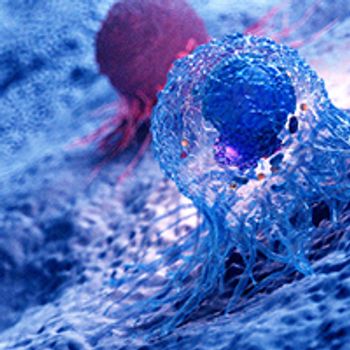
The European Commission has approved ivosidenib tablets in combination with azacitidine for the treatment of adult patients with newly diagnosed acute myeloid leukemia with an IDH1 R132 mutation who are not eligible to receive standard induction chemotherapy, and as monotherapy for the treatment of adult patients with locally advanced or metastatic cholangiocarcinoma with an IDH1 R132 mutation who received at least 1 prior line of systemic therapy.

Treatment with adjuvant anastrozole over a 10-year period remained tolerable and increased disease-free survival rates in postmenopausal women with hormone receptor–positive breast cancer, according to data from the phase 3 AERAS trial.

Fox Chase Cancer Center is pleased to announce the hiring of Abigail T. Berman, MD, MSCE, as an assistant professor in the Department of Radiation Oncology.

The FDA has granted an orphan drug designation to RAD 301 for the imaging of patients with pancreatic ductal adenocarcinoma.

Although molecularly targeted therapies have transformed the treatment paradigm for NSCLC, the kaleidoscope of genomic alterations that affects subsets of patients is straining the limits of current diagnostic and clinical discovery approaches.

Shilpa Gupta, MD, discussed the significance of the phase 3 JAVELIN Bladder 100 trial in urothelial cancer, updated data on the use of avelumab maintenance therapy following first-line chemotherapy in this population, and how this research could better inform patient-provider conversations about this option in the clinic.

Abhinav Deol, MD, gives insight on CAR T-cell therapy’s future role in the treatment landscape for multiple myeloma and what needs to be done to push the needle forward.

Mara Koelker, MD, discusses the rationale of evaluating racial differences in QOL for patients with prostate cancer and ways to address these short-term disparities in a real-world setting.
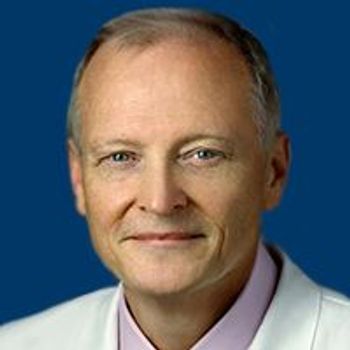
John L. Marshall, MD, discusses the identification of targetable subsets of patients with advanced CRC, unmet needs that remain to be addressed for patients with advanced CRC, and the continued need for a multidisciplinary approach in treating patients across the gastrointestinal cancer spectrum.
The FDA has granted fast track designations to ACR-368 monotherapy for the treatment of patients with platinum-resistant ovarian cancer and endometrial cancer who are positive for predicted sensitivity to the agent using Acrivon Therapeutics’ OncoSignature® test.

A new study published today in the New England Journal of Medicine found that for young women with hormone receptor-positive breast cancer, pausing endocrine therapy to pursue a pregnancy did not raise the short-term risk that the disease will recur.

Enrollment to the phase 3 MANIFEST-2 trial, which is examining the safety and efficacy of pelabresib plus ruxolitinib vs ruxolitinib alone in patients with JAK inhibitor–naïve myelofibrosis, has completed and topline findings are anticipated by the end of 2023.

As more treatment options enter the oncology landscape, access to these life-changing medicines has become a paramount concern.

Attaya Suvannasankha, MD, discusses the unique mechanism of action of REGN5459, the early efficacy and safety of the immunotherapy in heavily pretreated patients with relapsed/refractory multiple myeloma, and opportunities for further exploration.

China’s National Medical Products Administration has approved 2 supplemental new drug applications of zanubrutinib for use in treatment-naïve adult patients with chronic lymphocytic leukemia or small lymphocytic lymphoma and Waldenström macroglobulinemia.

The addition of venetoclax to lenalidomide and rituximab produced early evidence of clinical efficacy with a tolerable safety profile in previously untreated patients with mantle cell lymphoma.

Liat Hogen, MD, FRCSC, discussed the potential benefit for cytoreductive surgery in patients with initially unresectable stage IV epithelial ovarian cancer and the implications of findings from this retrospective analysis on future clinical decisions.

The investigational CAR T-cell therapy GD2-CART01 showed preliminary antitumor activity and safety in pediatric patients with relapsed or refractory high-risk neuroblastoma, according to data from a phase 1/2 trial.
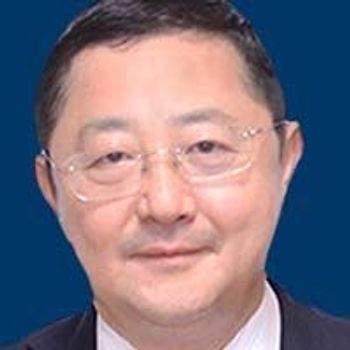
The combination of sintilimab and chemotherapy with or without the bevacizumab biosimilar IBI305 produced a statistically significant and clinically meaningful improvement in progression-free survival vs chemotherapy alone in patients with EGFR-mutated, nonsquamous non–small cell lung cancer who progressed after treatment with an EGFR TKI.
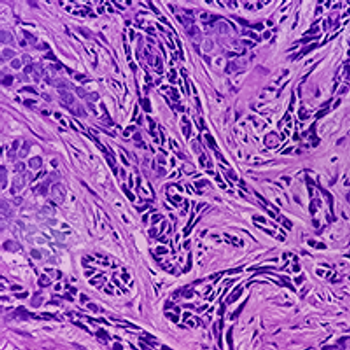
Researchers, including those at Rutgers Cancer Institute of New Jersey, are currently working to understand ethnic disparities in skin-cancer related morbidity and mortality in melanoma.

When patients with cancer are asked to be participants in a clinical trial, they are informed that a primary purpose of the investigative effort is to develop objectively valid, generalizable information that may be of value to patients with the same malignancy or benefit researchers in the development of future studies.

Karen S. Anderson, MD, PhD, discusses emerging data and role for CDK4/6 inhibitors in the treatment of patients with hormone receptor–positive, HER2-negative breast cancer, along with the growing use of antibody-drug conjugates across the breast cancer spectrum and updates in triple-negative breast cancer.
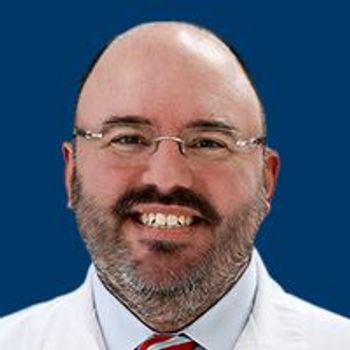
Eric A. Singer, MD, discusses the findings from cohort B of KEYNOTE-057 and explains why systemic therapy with pembrolizumab could be beneficial for patients with Bacillus Calmette-Guérin–unresponsive, high-risk, papillary-only non–muscle invasive bladder cancer who hope to avoid radical cystectomy.

The TKI anlotinib plus the PARP inhibitor niraparib continued to provide overall survival benefit with an acceptable safety profile when given to patients with platinum-resistant recurrent ovarian cancer.