
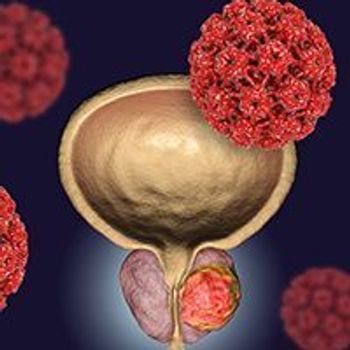
Radium-223 demonstrated efficacy with low rates of treatment-related adverse effects and treatment discontinuation in patients with metastatic castration-resistant prostate cancer that metastasized to the bones.

Your AI-Trained Oncology Knowledge Connection!
Radium-223 demonstrated efficacy with low rates of treatment-related adverse effects and treatment discontinuation in patients with metastatic castration-resistant prostate cancer that metastasized to the bones.
Treatment with the anti–Trop-2 antibody-drug conjugate sacituzumab govitecan elicited an objective response rate of 32% in platinum-ineligible patients with metastatic urothelial cancer following progression on an immune checkpoint inhibitor, according to the primary analysis of TROPHY-U-01 cohort 2.
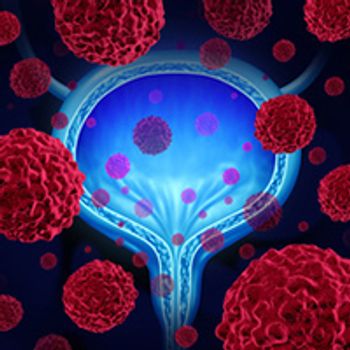
Tumor mutational burden and alterations in CDKN2A, CDKN2B, and MTAP were among several biomarkers that were predictive of response to enfortumab vedotin in patients with advanced urothelial carcinoma, according to findings from a retrospective analysis.

Because of an economic burden on the healthcare system occurring through the per-patient cost of allogeneic hematopoietic cell transplant, novel treatments to replace transplant and prevent graft-vs-host disease are necessary.
The presence of cytopenias did not affect the favorable and durable responses seen with ruxolitinib vs best available therapy in patients with steroid-refractory acute graft-vs-host disease.
Transurethral resection of bladder tumor followed by gemcitabine, cisplatin, and nivolumab led to stringent clinical complete responses in patients with muscle-invasive bladder cancer.
Early treatment with ruxolitinib led to high response rates in patients with steroid refractory acute graft-vs-host-disease, although benefits with ruxolitinib vs best available therapy were observed regardless of the timing of ruxolitinib administration.
A study did not find a correlation between the pharmacokinetics and pharmacodynamics of ruxolitinib for the treatment of patients 2 years of age and younger with graft-vs-host disease.
Orca-Q when using myeloablative conditioning with only tacrolimus monotherapy in the haploidentical stem cell transplant setting had acceptable safety and resulted in encouraging outcomes for patients with high-risk hematologic malignancies.
The addition of pembrolizumab to chemotherapy resulted in a significant and clinically meaningful improvement in overall survival, progression-free survival, and objective response rate vs chemotherapy alone when used as first-line treatment in patients with advanced HER2-negative gastric or gastroesophageal junction adenocarcinoma.
CD22-directed CAR T-cell therapy generated high complete response rates and manageable safety in heavily pretreated patients with large B-cell lymphoma who relapsed following CD19-directed CAR T-cell therapy.
Checkpoint inhibitor–based salvage regimens significantly reduced the likelihood that patients with relapsed/refractory classic Hodgkin lymphoma undergoing transplant would need further salvage therapy vs conventional salvage regimens.
Orca-T produced a 100% overall survival rate in 8 patients with hematologic malignancies who received an allogeneic hematopoietic stem cell transplant with 7/8 non-permissive HLA mismatched donors.
Ruxolitinib induced clinically meaningful overall survival improvements by decreasing non-relapse mortality rates in patients with acute graft-vs-host-disease.
First-line treatment with itolizumab produced rapid, durable responses and favorable safety in patients with acute graft-vs-host disease.
Timing of severe symptom onset is the only distinct difference between late and classic acute graft-vs-host disease, and long-term outcomes were similar between the two types of disease.
Patients with relapsed or refractory multiple myeloma treated with the CAR T-cell agent idecabtagene vicleucel had comparable efficacy and safety outcomes regardless of whether they had renal impairment, according to findings from a real-world study.
Bispecific CAR T-cell therapy targeting both CD20 and CD19 cells induced a 90-day complete response rate of 92% in patients with relapsed/refractory mantle cell lymphoma.

Cihangir Duy, PhD, MS, an assistant professor in the Nuclear Dynamics and Cancer research program and a member of the Cancer Epigenetics Institute at Fox Chase Cancer Center, has been awarded an American Society of Hematology 2023 Junior Faculty Scholar Award in basic/translational research.
Darolutamide maintained an acceptable long-term safety profile in patients with nonmetastatic castration-resistant prostate cancer, with approximately 30% of patients remaining on the treatment for at least 4 years
The final prespecified overall survival analysis of PROpel showed that the combination of abiraterone acetate plus olaparib sustained a trend toward improved efficacy vs standard-of-care abiraterone in patients with metastatic castration-resistant prostate cancer.
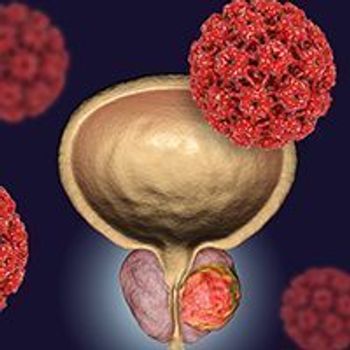
Sequencing treatment with Lutetium 177 PSMA-617 after radium-223 was safe and well tolerated and demonstrated similar overall survival in patients with metastatic castration-resistant prostate cancer regardless of whether they received 177Lu-PSMA-617 within 6 months or after 6 months of completing radium-223.

Talazoparib plus enzalutamide generated a statistically significant and clinically meaningful improvement in radiographic progression-free survival vs placebo plus enzalutamide as first-line treatment for patients with metastatic castration-resistant prostate cancer, irrespective of homologous recombination repair status.
The addition of darolutamide to androgen deprivation therapy and docetaxel prolonged overall survival in patients with metastatic hormone-sensitive prostate cancer, irrespective of disease volume or disease risk.
Brexucabtagene autoleucel demonstrated a survival benefit in patients with relapsed/refractory B-cell acute lymphoblastic leukemia regardless of prior lines of treatment or exposure to blinatumomab or allogeneic stem cell transplant, according to data from subgroup analyses of the ZUMA-3 trial.
The presence of minimal residual disease led to a higher likelihood of relapse in patients with acute lymphoblastic leukemia who underwent hematopoietic cell transplant compared with those who had undetectable MRD pre and post transplant.
The fully-human scFv CD19-targeted CAR T-cell therapy JCAR021 elicited durable responses but with a high rate of neurotoxicity when administered at a dose of 7 x 10⁶ cells/kg in patients with relapsed or refractory large B-cell lymphoma, according to data from a phase 1/2 trial.
The dual CD19- and CD20-directed, freshly administered CAR T-cell therapy zamtocabtagene autoleucel elicited a high response rate with deepening responses over time in patients with relapsed/refractory diffuse large B-cell lymphoma.
An independent data monitoring committee has recommended that a phase 3 trial evaluating uproleselan plus chemotherapy for patients with relapsed/refractory acute myeloid leukemia should continue to the planned overall survival event trigger.
New UC Davis study finds relationship between tumor microbiome and immune system in patients with soft tissue sarcoma.